
Objectification
What does it mean to objectify someone? It means that I see/treat them as an object rather than as a person. If I objectify someone I might see them (and their concerns) as an annoyance to be brushed aside so I can get past them and move on.
 An example of this might be a character in a video game. I see this character coming toward me with a sword. I need to fight him and get him out of the way so I can proceed in the game. So I pull out my sword and slay him. Or I see a character who has something I want (treasure, essence, a key, power) and if I eliminate him, I can take his possession and move to the next level better equipped to succeed.
Since this video game character is not a real person, it’s easy to treat him as an object to be used for my own purposes. But if he were a real person, would that change my behavior?
I can approach people from one of two operating systems:
Relational Operating System = All people have value.
Object Operating System = All people are objects, to be used.
To see people in terms of myself is to see an object, not a person. Here are some ways I may see others as objects:
- better than me
- worse than me
- labeled by me
- a vehicle to help me get my way
- irrelevant
- a means by which I alter based on what I see
Objectifying is shame-based, selfish, impulsive, temporary, and stems from feelings of worthlessness.
Reducing people to mere objects is the way I resist them and the human connection I have to them. It is also the way I keep myself disconnected from others and the important part of me.
 When I see others as real people it results in empathy, respect for them and for myself, feelings of value and worth, safety, and the ability to look past weakness.
President Thomas S. Monson said, “Never let a problem to be solved become more important than a person to be loved.”
The better I feel about myself, the more I am able to treat others as valuable children of God.
To be continued . . . with Part 46
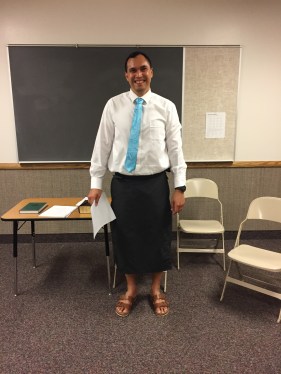 What if someone joined your ward who was from Albania, or Nigeria, or Bolivia or Mongolia? (Or Mars, for that matter.) What if they wore different clothing to church – a sarong or a kilt or a burka or a lavalava, or shorts and sandals? What if a woman showed up with tattoos and body piercings? What if two men showed up who were living a gay lifestyle but who wanted the influence of the gospel in their life? What if an unwed teenager who was obviously pregnant came to Sacrament Meeting? What if someone of a different political persuasion came? What about someone who reeked of tobacco smoke or alcohol? An excommunicated man? A young lady who came home from her mission early? A returned missionary who is addicted to porn? An ex-convict who spent 20 years in prison?
  How would we react if these people showed up at church? Would we escort them back outside? Would we whisper about them behind their backs? Would we avoid them? Or would we go up to them and welcome them, shake their hands, and introduce ourselves.
  Imperfect Guy