
Embrace the Marginalized
A few years ago, Elder Robert C. Gay of the Seventy gave a commencement address at BYU-Idaho. Among other things, he encouraged the graduates to “embrace the marginalized of this world, or as the Savior said, the lost, the last, and the least.”
Who are the marginalized? What if one of these people showed up at your Sacrament Meeting?
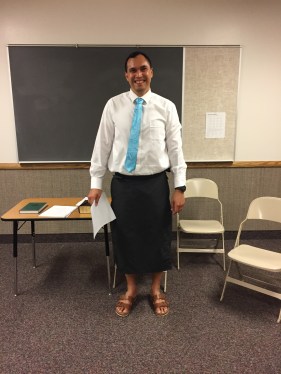 What if someone joined your ward who was from Albania, or Nigeria, or Bolivia or Mongolia? (Or Mars, for that matter.) What if they wore different clothing to church – a sarong or a kilt or a burka or a lavalava, or shorts and sandals? What if a woman showed up with tattoos and body piercings? What if two men showed up who were living a gay lifestyle but who wanted the influence of the gospel in their life? What if an unwed teenager who was obviously pregnant came to Sacrament Meeting? What if someone of a different political persuasion came? What about someone who reeked of tobacco smoke or alcohol? An excommunicated man? A young lady who came home from her mission early? A returned missionary who is addicted to porn? An ex-convict who spent 20 years in prison?
 How would we react if these people showed up at church? Would we escort them back outside? Would we whisper about them behind their backs? Would we avoid them? Or would we go up to them and welcome them, shake their hands, and introduce ourselves.
Here’s a little quiz about how to react to people around us who are different:
When I see someone who is different from me, I should:
- Avoid them so that their differentness doesn’t rub off on me.
- Get to know them, so that I can be less judgmental and broaden my life experience.
- Love them, as a brother or sister, regardless of their differences.
But what if someone else’s beliefs or practices are in direct opposition to gospel principles and true doctrine? I should:
- Criticize them or try to convert them.
- Befriend them and engage in some civil dialogue with them.
- Love them and pray for them.
I have a co-worker who continually blasts the church and it’s members. I should:
- Blast him back.
- Defend the church and try to show him the error of his ways.
- Love him and be an example of the believers, in word, in conversation, in charity, in spirit, in faith, in purity. (1 Tim 4:12)
Elder Uchtdorf taught: I hope that we welcome and love all of God’s children, including those who might dress, look, speak, or just do things differently. It is not good to make others feel as though they are deficient. Let us lift those around us. Let us extend a welcoming hand.
To be continued . . . with Part 45
 Imperfect Guy