
A New Year’s Theme
As I look at setting New Year’s resolutions, which is my MO at this time of year, I typically like to choose a word or phrase as a theme for the coming year. I haven’t settled on this one for sure, but I’m leaning toward “be still.”
One of my favorite talks from this past October General Conference is the one by Elder L Todd Budge.

It is interesting to note that the Japanese word for “busy,” isogashii, is made up of a character with two symbols (忙). The one on the left means “heart” or “spirit,” and the one on the right means “death”—suggesting perhaps, that being too busy to nourish our spirits can lead us to die spiritually.
The Lord knew—in this fast-paced world full of distractions and in commotion—that making quality time for Him would be one of the major challenges of our day.
President David O. McKay said: “I think we pay too little attention to the value of meditation, a principle of devotion. Meditation is one of the most sacred doors through which we pass into the presence of the Lord.”
There is a word in Japanese, mui, that, for me, captures this more faith-filled, contemplative sense of what it means to be still. It is comprised of two characters (無為). The one on the left means “nothing” or “nothingness,” and the one on the right means “to do.” Together they mean “non-doing.” Taken literally, the word could be misinterpreted to mean “to do nothing” in the same way “to be still” can be misinterpreted as “not talking or moving.” However, like the phrase “to be still,” it has a higher meaning; for me it is a reminder to slow down and to live with greater spiritual awareness.
God desires that we approach our time with Him with the same kind of heartfelt devotion. When we do so, our worship becomes an expression of our love for Him.
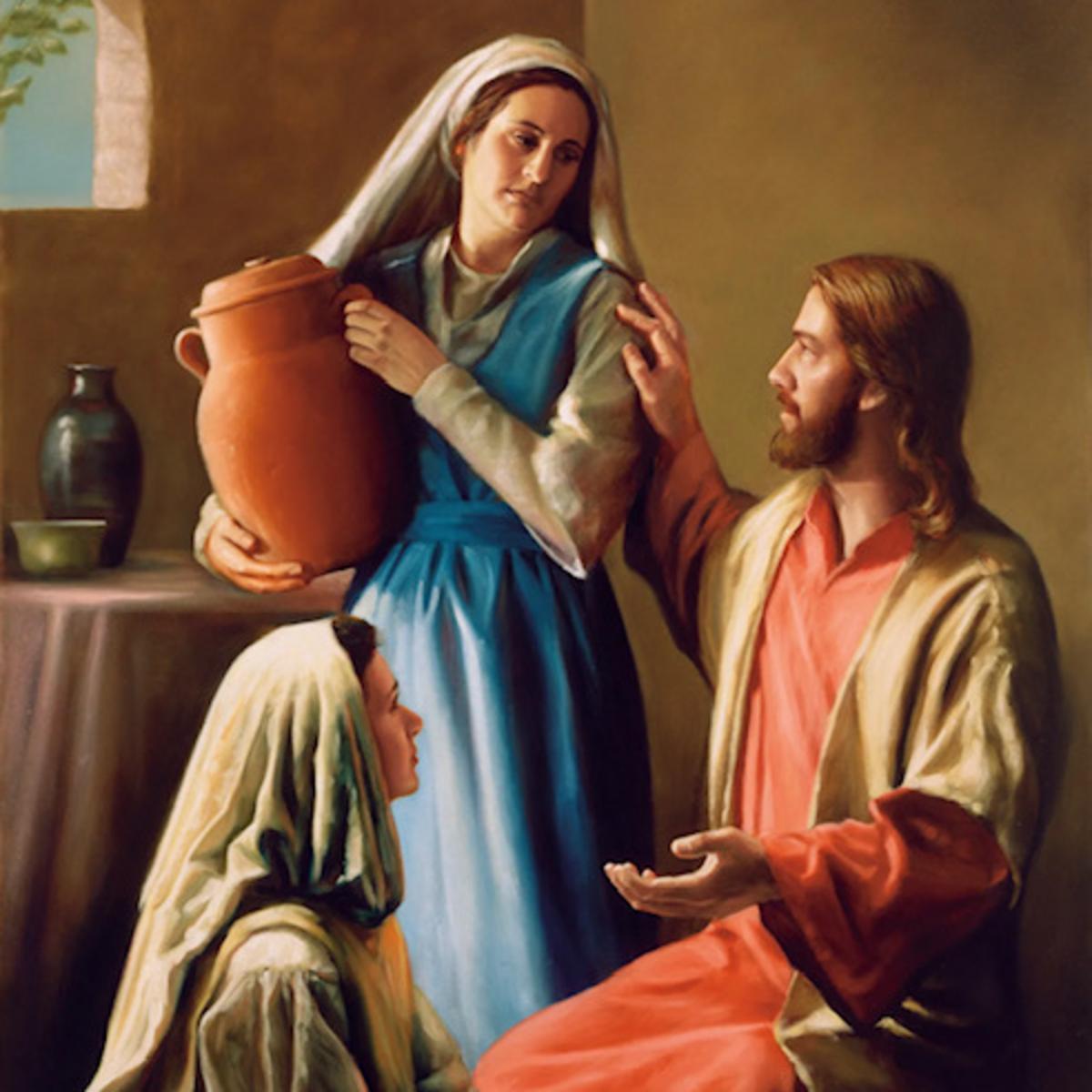
When our focus is less on doing and more on strengthening our covenant connection with Heavenly Father and Jesus Christ, these sacred moments will be enriched, and we will receive the guidance needed in our personal lives. We, like Martha in the account in Luke, are often “careful and troubled about many things.” However, as we commune with the Lord each day, He will help us to know that which is most needful.
Even the Savior took time from His ministry to be still. The scriptures are replete with examples of the Lord retreating to a solitary place—a mountain, the wilderness, a desert place, or going “a little way off”—to pray to the Father. If Jesus Christ sought quiet time to commune with God and to be strengthened by Him, it would be wise for us to do the same.
As we concentrate our hearts and minds on Heavenly Father and Jesus Christ and listen to the still, small voice of the Holy Ghost, we will have greater clarity about what is most needful, develop deeper compassion, and find rest and strength in Him.
I’m grateful that I’m retired and have a little more time to pull back from the daily grind and find peace and calm. It’s nice to not feel the expectation of constantly needing to “get it right” but rather, breathe in the stillness.
 Imperfect Guy