Confessions of a Recovering Perfectionist – Part 88

I was in prison. 

I mentioned in one of my previous posts that I attend a 12-Step group every week (see Part 82). It’s a virtual meeting, using Zoom, and is specifically for men with pornography challenges. 

I was asked why I attend this particular group since I don’t struggle with pornography addiction, myself. 

Years ago, I was reading in Matthew where Jesus tells about the sheep on his right hand and the goats on his left. 

For I was an hungered, and ye gave me meat: I was thirsty, and ye gave me drink: I was a stranger, and ye took me in: Naked, and ye clothed me: I was sick, and ye visited me: I was in prison, and ye came unto me. (Matthew 25:35-36)

The very last phrase struck me. “I was in prison, and ye came unto me.” I felt a prompting to come unto people who are in prison. I contacted one of my church leaders to see what opportunities there are to support those who are incarcerated. He said he would check on it. 

Apparently, you can’t just show up at a jail and go in and visit people. He started the process of going through the red tape, but my request got lost somewhere along the way. So I never got permission to help out in that way. 

A little later I was reading in the scriptures about those who are “led away captive” by the enemy. And I realized that captivity isn’t just brick and mortar. I can become a prisoner to anything that limits my agency. And that’s just what an addiction does. If I can’t say “no” to a behavior or substance or compulsion, then I’m not truly free. 

Although I wanted to visit others in prison, I was visited in some of my prisons. Others facilitated my liberation by coming to me and giving me light and truth. And the truth makes me free. So one reason I attend the 12-Step group is to receive freedom from, and freedom for. 

When Jesus first announced himself to those in Nazareth as the Anointed One, He taught what some of his purposes are: 

The Spirit of the Lord is upon me, because he hath anointed me to preach the gospel to the poor; he hath sent me to heal the brokenhearted, to preach deliverance to the captives, and recovering of sight to the blind, to set at liberty them that are bruised. (Luke 4:18

I’m grateful that, in so many ways, He provides deliverance to the captives. 

To be continued . . . with Part 89

Confessions of a Recovering Perfectionist – Part 86

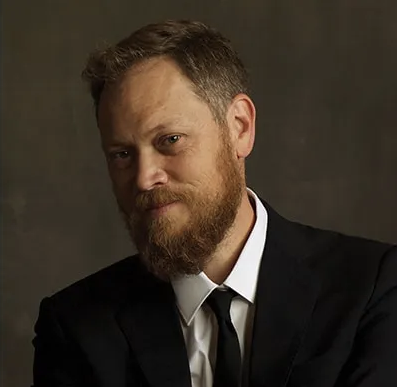
I grew a beard.

I’ve always cared too much about what other people thought of me. 

I’ve employed the Four Ps, which are performing, perfecting, pleasing, and proving (Brené Brown). None of these are inherently bad, but when they are done for the wrong reasons, they perpetuate the “not good enough” mentality I’ve struggled with for most of my life. 

While I worked at BYU-Idaho, I obeyed the Honor Code which includes a dress and grooming standard: Men are expected to be clean-shaven; beards are not acceptable. 

Upon seeing my beard, some might think, “Well, now that you’re retired and are no longer subject to the Honor Code, you’re rebelling against what was a requirement for so many years.” 

Rather than “rebelling against” I’d prefer to use the words “healing from.” 

In the last few years, I’ve noticed a difference between doctrine and culture. In the Church, we have rules and laws, and that’s wonderful—except when they are twisted beyond what the Lord expects or wants. Is it OK for a deacon to pass the sacrament if he’s wearing a blue shirt? When I sustain church leaders, must I use my right hand? Can I polish my shoes on Sunday? 

There are good reasons to wear a white shirt while passing the sacrament, to sustain leaders with my right hand, and to avoid polishing my shoes on Sunday. But they are more cultural than doctrinal. They aren’t in the Handbook

It reminds me of the 613 items in the Jewish Law. At some point it becomes pharisaical. How many steps can I take on the sabbath? Etc.

For most people, this wouldn’t be an issue. But for a perfectionist, it’s huge. Not only do I expect a high standard of myself, but I also expect it of others. So I easily become judgmental. 

“I can’t believe she’s got two piercings in her ears; doesn’t she follow the prophet?”
“He’s wearing a chain with a cross symbol; doesn’t he know we worship a living Christ?”
“That girl is wearing a tattoo; she obviously doesn’t respect her body.” 

Again, these are more cultural than doctrinal. Will they prevent someone from getting a temple recommend? Not necessarily. 

Some might say that if we loosen our standards on small things, then we’ll eventually loosen them on larger things. If I grow a beard, then I’m facing the wrong direction and will go downhill. That sounds pretty judgmental and perfectionistic. 

So, growing a beard is therapeutic for me. It allows me to enter a gray area without beating up on myself. I can do this and believe that the Lord is still pleased with me. 

“. . . the Lord seeth not as man seeth; for man looketh on the outward appearance, but the Lord looketh on the heart.” (1 Samuel 16:7

To be continued . . . with Part 87

Confessions of a Recovering Perfectionist – Part 85

I just retired. 

This past week was my last week of work. I’ve been working at BYU-Idaho / Ricks College for more than 37 years. And now it’s time to start the next chapter of my life. 

Some people have asked me what I’m going to do after I retire. I’ve asked myself that question. And I’ve prayed about it. Much of my life I’ve been inclined to have things all planned out. So I’ve been thinking I wanted to fill my life with productive and enjoyable things after retirement. 

But I talked to a wise friend who recommended that I not fill my schedule too full, to the point where I couldn’t just stop and be mindful. He suggested that I allow myself opportunity to grieve the loss of my job. At first, I was surprised. Why would I need to grieve? Why couldn’t I just walk away and not look back? 

Although I didn’t understand, I trust him. So I’m hoping to give space for grieving if I’m able. I’ve shied away from uncomfortable feelings, like grief. But it’s time to lean into the discomfort and push through it. The end result should be healing. Already, I’m feeling a combination of melancholy and relief. 

I look forward to slowing down a bit. I want to “be still and know that [He] is God.” I want to “Hear Him” and come to know Him more fully.  

To be continued . . . with Part 86

Confessions of a Recovering Perfectionist – Part 84

The Meaning of Repentance

Growing up in the church, I learned the “steps to repentance” as taught in Primary and in the “Rainbow” discussions on my mission. There are six steps (sometimes five, depending on on your source). And they need to be done sequentially, in order for the repentance to be complete. These formal process steps didn’t overtly mention the Savior. So I come away with a checklist procedure which allows me to repent, but not involve the Savior in the process? No wonder I didn’t have a good impression of repentance. 

I recently studied a talk by Elder Theodore M. Burton, former member of the Seventy, which he gave at BYU in 1985, called The Meaning of Repentance

As described in the talk, the Old Testament Hebrew word for repent is “shube” which means to turn or to turn from. So the basic meaning is to turn from evil and turn back to God. 

The New Testament Greek word for repent, “metaneoeo” means a change of mind or thought or thinking so powerful and so strong that it changes our very way of life.

But trouble came when Greek was translated into Latin. Only the educated people spoke Greek. When the New Testament was translated into Latin for the use of the common people who spoke that language, an unfortunate choice was made in translation. “Metaneoeo” was translated into the word “poenitere.” The root “poen” in that word is the same root found in our English words punish, penance, penitent, and repentance. So the beautiful meaning of Hebrew and Greek was changed in Latin to an ugly meaning involving hurting, punishing, whipping, cutting, mutilating, disfiguring, starving, or even torturing. Small wonder then that most people have come to fear and dread the word repentance which they were taught and now understand to mean repeated or neverending punishment. People must somehow be made to realize that the true meaning of repentance is that we do not require people to be punished or to punish themselves, but to change their lives so they can escape eternal punishment. If they have this understanding, it will relieve their anxiety and fears and become a welcome and treasured word in our religious vocabulary.

One of my favorite definitions of repentance I heard in a 12-step meeting is: “Turning from what doesn’t work to what does work and to Him who makes it work.” I don’t need to beat myself up when I make a mistake, I just need to turn and get back on the path. 

Another definition of repentance I like is: “Returning to the supper of the Lord.” So if I’ve strayed away, I can re-“turn” to the table and sit at my place there, partaking of the bread of life and the living water. 

These are much healthier ways for me to think of repentance than the old formal approach. 

To be continued . . . with Part 85

Confessions of a Recovering Perfectionist – Part 83

Pulled off the Road

A while back, I blogged about whether life is like a mountain or a path (see Part 67). I’ve often seen life as a mountain I’m climbing with perfection being the pinnacle. If I make a mistake, I slide all the way back down to square one, and have to start my climb over again. Recently, I found this passage by Dutch priest Henri Nouwen in The Inner Voice of Love

When suddenly you seem to lose all you thought you had gained, do not despair. Your healing is not a straight line. You must expect setbacks and regressions. Don’t say to yourself, “All is lost. I have to start all over again.” This is not true. What you have gained, you have gained. 

Sometimes little things build up and make you lose ground for a moment. Fatigue, a seemingly cold remark, someone’s inability to hear you, someone’s innocent forgetfulness, which feels like rejection—when all these come together, they can make you feel as if you are right back where you started. But try to think about it instead as being pulled off the road for a while. When you return to the road, you return to the place where you left it, not to where you started.

It is important not to dwell on the small moments when you feel pulled away from your progress. Try to return home, to the solid place within you, immediately. Otherwise, these moments start connecting with similar moments, and together they become powerful enough to pull you far away from the road. Try to remain alert to the seemingly innocuous distractions. It is easier to return to the road when you are on the shoulder than when you are pulled all the way into a nearby swamp.

In everything, keep trusting that God is with you, that God has given you companions on the journey. Keep returning to the road to freedom.

When I pull back onto the road, I don’t need to go all the way back to where I began. I can just continue from that point. I don’t relinquish all the growth and learning I’ve gained along the way. 

To be continued . . . with Part 84

Confessions of a Recovering Perfectionist – Part 82

Healing Through Christ

I volunteer with a 12-Step group every Thursday evening. The group is specifically for LDS men with pornography addictions. It meets virtually, using Zoom. We have men from UT, ID, CA, OK, MI, MD, and possibly from other states (since we don’t need to share where we are from). In the past, we’ve had one from OR, one from TX, and one from Australia. Most use just their first name, and some don’t share their faces in the meeting. The group size averages about 15 attendees at a meeting. The lowest I’ve seen was six and the highest was 24. It’s a relatively anonymous group; we only share what we want to. Some are quite vulnerable and others are somewhat vague. 

We use a workbook called Healing Through Christ. It is based on the Church’s ARP manual and the AA 12-Step program. But it expands significantly on the concepts found in the 12 steps. For example, Step 1 has six subsections. Step 4 has 10 subsections. So, rather than spend one week on one step, we spend one week on one section. Altogether, it has 46 sections, so it takes us the better part of a year to work through the entire book. It also has a glossary and two appendices. 

It includes scriptural content and quotes from general authorities of the Church. But it also has content from such other experts as Patrick Carnes, Brené Brown, Ekhart Tolle, Donald Hilton, Steven Cramer, Philip Harrison, Melody Beattie, Brad Wilcox, Sheri Dew, Stephen Robinson, the SAA Green Book, and the SA White Book. 

In the group meeting, we spend about 45 minutes going over the content in the workbook, which includes comments and discussion around the concepts. And then we spend another 45 minutes in the sharing portion of the meeting. This is my favorite part because the group members get real. No sugar coating. Vulnerability is key and so is the sharing of spiritual growth. We learn what it means to live “in recovery.” 

With all of that as a backdrop, here’s the question I’d like to pose about pornography’s effects on us: Is it an addiction? Or a challenge? 

Some people will say that when I call myself an addict, then I’m defining myself by my challenge, whereas my true identity is that I’m a son of God. However, in 12-step programs, honesty is the first step. So I can either be in denial, ignoring the effects my behavior has on myself and others, or I can take responsibility for my choices and move into recovery mode. 

There are other people for whom pornography is a challenge, but not a full-blown addiction. So we don’t want to make it more severe than it is. We all have natural man tendencies and pulls, but if we’re able to say “no” to those pulls, then it’s likely not an addiction. 

However, some addicts are able to say “no” or avoid the behavior, by white-knuckling for a time. But they are still addicted, which takes a huge toll on their system, by keeping them in their limbic brain or living in survival mode, often referred to as fight, flight, or freeze mode. 

I am a son of God, and that’s my true identity. And it turns out that a significant aspect of recovery is to come to see myself as God sees me — as a beloved, precious child of God, whose love for me is perfect, infinite, and unqualified. 

We all need healing through Christ, especially perfectionists. When I finally come to realize what He has done for me, my perfectionism dissipates significantly. I come to recognize that in this life, the expectation is that I become perfect in Christ, rather than perfect like Christ. The difference is important. 

To be continued . . . with Part 83

Confessions of a Recovering Perfectionist – Part 81

Another Look at Perfection

I have a couple of topics ruminating around in my head, but neither of them has solidified yet. So I’ll save them for future posts. 

This time, I’ll point you to an amazing, short, powerful video about what becoming perfect really means, by Robert L. Millet. Enjoy!

Robert Millet’s 5-Minute Fireside: Whole in Christ—Another Look at Perfection

To be continued . . . with Part 82

Confessions of a Recovering Perfectionist – Part 80

How Can I Pray?

In this blog post, I’m going to look at how the formality of my prayers has affected my spiritual growth. I believe there are some connections to the development of my perfectionism. 

As a kid, I learned to pray with my arms folded, head bowed, and eyes closed. This was probably so that I wouldn’t be distracted by or distract others. I also learned to address God as “Our Father in Heaven” since that is how Jesus modeled it in The Lord’s Prayer. And I learned the respectful use of thee, thou, thy, and thine when praying. I even got pretty good with words like dost, wouldst, and canst

The intent was to show reverence and respect for Deity. But for someone like me, for whom God was somewhat unapproachable, this just served to increase the distance between Him and me. So now I’m learning how to be different with God in helpful, productive ways. 

At the risk of sounding overly Protestant, I now enjoy praying while looking heavenward with arms stretched out and open. Sometimes I like to picture God as sitting by me or holding me while I’m praying. I often pray in such mundane places as: while driving, in the shower, doing yard work, or on the treadmill. Alma encourages us to pray in our fields, in our houses, in our closets, in our secret places, and in our wilderness. (See Alma 34.)

I’ve learned that I can pray using informal pronouns. I can say you and your. I can even call Him Dad. And, as opposed to making me feel disrespectful, this actually makes me feel closer to Him. (Jesus called Him Abba, which is like calling him Papa or Daddy.) 

In researching the pros and cons of formal pronouns, I found that Joseph Fielding Smith taught: “The Father and the Son should always be honored in our prayers in the utmost humility and reverence. … The changing of the wording of the Bible to meet the popular language of our day, has, in the opinion of the writer and his brethren, been a great loss in the building of faith and spirituality in the minds and hearts of the people.” (Answers to Gospel Questions, Deseret Book Co., 1958, vol. 2, pp. 15, 17.)

In April 1993 General Conference, Elder Oaks taught: “In our day the English words thee, thou, thy, and thine are suitable for the language of prayer, not because of how they were used anciently but because they are currently obsolete in common English discourse. Being unused in everyday communications, they are now available as a distinctive form of address in English, appropriate to symbolize respect, closeness, and reverence for the one being addressed.”

Further, Elder Wirthlin taught: “Do you want to commune with the Infinite? Then approach Him with reverence and humility. Don’t worry so much about whether your words are polished or not. Worry instead about speaking from your heart.”

Everyone’s journey is different. In my own experience, I’ve found that when I pray in public I still feel the pull to use the formal speech. But in my personal, heartfelt prayers, I want to bring Him as close to me as I can. And this has helped me manage my perfectionism in a healthier way. 

To be continued . . . with Part 81

Confessions of a Recovering Perfectionist – Part 79

Worthiness Is Not Flawlessness

Twice a year, in April and October, I reference General Conference talks that relate to perfectionism. I’ll refer to three here. 

Bradley R. Wilcox, well-known for his famous “His Grace is Sufficient” talk at BYU, is now Second Counselor in the Young Men General Presidency. (Brad and I were singers in the Young Ambassadors at BYU back in 1979-80.) In the Saturday Evening Session, Brad said: 

God’s message is that worthiness is not flawlessness. Worthiness is being honest and trying. Elder Bruce C. Hafen said that developing a Christlike character “requires patience and persistence more than it requires flawlessness.” The Lord has said the gifts of the Spirit are “given for the benefit of those who love me and keep all my commandments, and him that seeketh so to do.” 

Remember, change is possible, repentance is a process, and worthiness is not flawlessness. Most important, remember that God and Christ are willing to help us right here and now.

Some mistakenly receive the message that God is waiting to help until after we repent. God’s message is that He will help us as we repent. His grace is available to us “no matter where we are in the path of obedience.” Elder Dieter F. Uchtdorf has said: “God does not need people who are flawless. He seeks those who will offer their heart and a willing mind, and He will make them perfect in Christ.

This resonates with me because, for much of my life, if I wasn’t doing everything perfectly, I felt I wasn’t worthy (to approach God, to take the sacrament, to attend the temple, etc.). So I love the concept that worthiness is being honest and trying. 

Elder Michael A. Dunn, of the Seventy spoke in the Sunday Afternoon Session about how the British national bicycle racing teams went from being the laughingstock of the cycling world to winning the Tour de France six times. They did this by focusing on improving each aspect of their cycling by just one percent. 

Instead of trying to perfect everything, what if we tackled just one thing?

Could aggregating small but steady marginal gains in our lives finally be the way to victory over even the most pesky of our personal shortcomings? Can this bite-sized approach to tackling our blemishes really work?

If you can get just one percent better at something each day, by the end of a year … you will be 37 times better.

I embrace his message because I don’t need to have unrealistic expectations of my capabilities. Growth can happen by just being a little bit better today than I was yesterday. 

Elder Erich W. Kopischke addressed Mental Health, sharing the heartbreaking story of his son, who returned home early from his mission due to severe anxiety and depression. 

We long to be perfect even as our Heavenly Father and Jesus Christ are perfect. Because mental illness can interfere with our perception of perfection, it remains all too often a taboo. As a result, there is too much ignorance, too much silent suffering, and too much despair. Many, feeling overwhelmed because they do not meet perceived standards, mistakenly believe they have no place in the Church.

For all who are personally affected by mental illness, hold fast to your covenants, even if you might not feel God’s love at this time. Do whatever lies in your power and then “stand still … to see the salvation of God, and for his arm to be revealed.”

Although my perfectionism isn’t officially a mental illness, it definitely affects my thinking in unproductive ways—if I let it. Fortunately, I’m learning to recognize some of the warning signs of those mental tendencies, and then avoid the pitfalls. 

To be continued . . . with Part 80