
A World at War
 I was born into a world at war. I’m not trying to sound dramatic. According to scripture, before I was born, there was war in heaven. Adam and his angels fought against the dragon, or Lucifer. Lucifer and his angels fought and lost the battle. He, and a third of the hosts of angels fell and were cast down to the earth, never to receive bodies, and to spend their time trying to get the rest of us to fall also, to make us miserable, like themselves.
So I was born into a fallen world, a lone and dreary, telestial world removed from the presence of my Father, God. A world of pain and afflictions, thorns and briars, trials and tribulations. Those trials and afflictions can be useful, if they bring me back to God.
At a young age, I was wounded. No, I wasn’t physically abused. But I began to take on the culture around me that told me I wasn’t enough, that I wasn’t good and valuable. And each time I was wounded, I made agreements with myself that limited my ability to become all that God wanted me to be.
When I did this growing up, I internalized many beliefs about myself that I thought were true. But now that I better understand the influence of the adversary in our lives, I can see that these were lies, whispered in my ear by the father of lies. He made those agreements with me so he could limit my potential. Not good enough. Not smart enough or talented enough. Unworthy. Unloveable. Can’t change. Stuck like this forever. Never get it right. Never amount to much.
It’s interesting that when these lies are ingrained in us in our formative years, at an impressionable time, it’s hard to counteract them. If I’ve gone through years believing that I’m a disappointment to God and others, even if people later tell me otherwise, I’ve got that agreement and it’s difficult to break through that.
When I say that we’re in a world at war, does that sound like I’m just trying to be sensationalistic and to focus on the negative? Is Satan really that strong and determined? Yes, he is strong and determined. No, I’m not just being sensationalistic.
Jesus himself said that the thief (meaning Satan) cometh to steal, to kill, and to destroy (John 10:10). Not just to bully us around a bit, but to steal our happiness, to kill our faith, to destroy our hope.
The evil one has had thousands of years to practice his tactics and billions of people to practice on. He has improved and diversified his fighting weapons. He has become really, really good at what he does. President Spencer W. Kimball taught that the fight against Satan and his forces “is not a little skirmish with a half-willed antagonist, but a battle royal with an enemy so powerful, entrenched, and organized we are likely to be vanquished if we are not strong, well-trained, and watchful.”
Just a few months ago, President Russell M. Nelson said in General Conference: “Satan knows who you are and who you were premortally, and he understands the work that must be done before the Savior returns. And after millennia of practicing his cunning arts, the adversary is experienced and incorrigible.”
In that same General Conference, Elder Ronald A. Rasband taught: “Brothers and sisters, we are at war with Satan for the souls of men. Since [our pre-earth life], the adversary’s minions have been fighting the faithful who choose the Father’s plan.
Satan knows his days are numbered and that time is growing shorter. As crafty and cunning as he is, he will not win. However, his battle for each one of our souls rages on.
 Satan is a subtle snake, sneaking into our minds and hearts when we have let our guard down, faced a disappointment, or lost hope. He entices us with flattery, a promise of ease, comfort, or a temporary high when we are low. He justifies pride, unkindness, dishonesty, discontent, and immorality, and in time we can be ‘past feeling.’ The Spirit can leave us. ‘And thus the devil cheateth their souls, and leadeth them away carefully down to hell.’”
So in the past, my tendency was to blame myself for my weaknesses. If my wife and I had a disagreement. If I yelled at one of my kids. If I felt fearful about my ability to succeed. But knowing what I do about the plan of the devil, I’m better able to recognize his attempts to influence me. And that changes my whole feeling about myself. I’m not at war with my true self. I’m at war with the false self, that natural man who is an enemy to God. My true self is good, divine, powerful, a precious son of God.
The more I am able to live in my true self, the more I recognize the Lord’s influence in my life. He also whispers to me. As I learn of Him, I am better able to distinguish His voice.
And as I start to trust the Lord and come unto Him, he heals my wounds. He breaks those old agreements, those faulty core beliefs I took on as a child. I start to experience the mighty change of heart. I become a new person. I become converted.
The scriptures teach me how to protect myself from evil. “Put on the whole armour of God, that ye may be able to stand against the wiles of the devil. For we wrestle not against flesh and blood, but against principalities, against powers, against the rulers of the darkness of this world” (Ephesians 6:11–12).
As I put on the armor of God, I will protect myself and strengthen my loved ones. Every time the Nephites went up to battle “in the strength of the Lord,” they prevailed. As I rely on the strength of the Lord, granted through His atoning grace, I too can be victorious. I can receive the peace, security, and happiness of being firmly grounded in the gospel, of being converted to Jesus Christ.
To be continued . . . with Part 53
 Last week, I attended a sibling reunion. I was raised seventh in a family of ten children, five boys and five girls. We had a reunion where my brothers and sisters and our spouses spent two days at Lava Hot Springs in Eastern Idaho. As part of the get-together, we had time for each of us to share what we are studying and learning.
 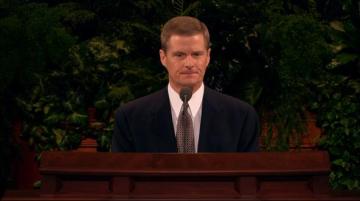 The timing is interesting.
 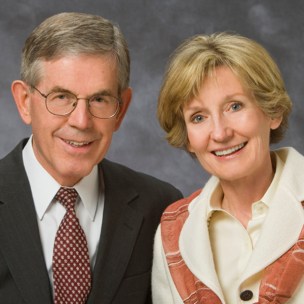 Earlier this month, Elder Bruce C. Hafen and his wife Marie came to the BYUI campus to speak at an Academic Forum. They also met with faculty in a separate meeting. They have recently written a new book called, “
 Also earlier this month I read a BYU devotional talk by
 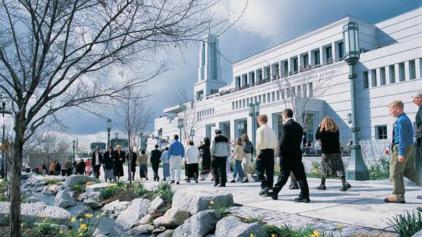 The first one is by
 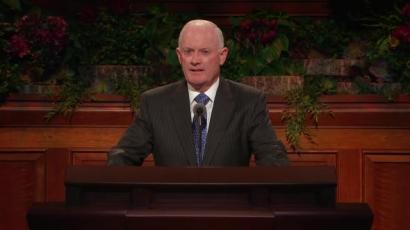 But my favorite talk of the whole conference was by
  A few years ago, a friend suggested I read the book
  As I read of Kurt’s experience there, my own heart yearned for a similar experience. I looked into the possibility of attending. Things fell into place and I found myself in Wanship, Utah earlier this month. For three days, I was continually presented with the idea that God loves me—unconditionally. For part of the first day my cold, closed heart held on tightly, skeptical that God could really love me that way. But gradually I was convinced to let go of the hardness and the Lord broke down the barriers I had built up many years ago. He offered His Love to me over and over, and it sank deep into my heart. It was a truly transformational time for me.
 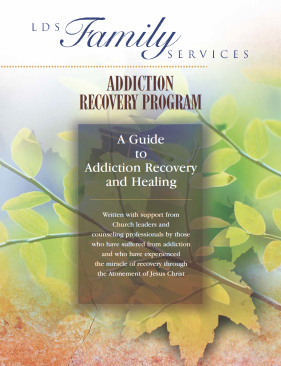 Years ago, when the Church realized that members needed help dealing with addiction, they looked at what worked and didn’t work. In conjunction with LDS Family Services (then known as LDS Social Services) the Twelve Steps of Alcoholics Anonymous were adapted into the framework of the doctrines, principles, and beliefs of the Church. This was back in the late 1990s. Working with those who had experienced recovery, the first ARP (Addiction Recovery Program)
  It might work with addicts, but it’s not limited to them; everyone everywhere can benefit from it. We all need to go through our Step 8s, our Step 3s, our Step 6s. If we believe it is only for people who are addicts, we are missing the message—the whole Grace message of Christ’s sacrifice. We’ll miss seeing that we need Christ in our own selves. But how poor a gauge we are of our own health. That’s why we go to doctors. They can give us doctor’s orders to change certain behaviors that are self destructive. We don’t tend to find that out ourselves. Hence, the need for a program.
  Satan strives to keep me stuck, to stop my progress. He wants me to be damned, like he is. But he is very subtle. He doesn’t make his presence obviously known to me. As
 An example of this might be a character in a video game. I see this character coming toward me with a sword. I need to fight him and get him out of the way so I can proceed in the game. So I pull out my sword and slay him. Or I see a character who has something I want (treasure, essence, a key, power) and if I eliminate him, I can take his possession and move to the next level better equipped to succeed.
  When I see others as real people it results in empathy, respect for them and for myself, feelings of value and worth, safety, and the ability to look past weakness.
 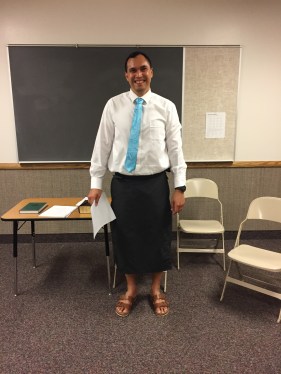 What if someone joined your ward who was from Albania, or Nigeria, or Bolivia or Mongolia? (Or Mars, for that matter.) What if they wore different clothing to church – a sarong or a kilt or a burka or a lavalava, or shorts and sandals? What if a woman showed up with tattoos and body piercings? What if two men showed up who were living a gay lifestyle but who wanted the influence of the gospel in their life? What if an unwed teenager who was obviously pregnant came to Sacrament Meeting? What if someone of a different political persuasion came? What about someone who reeked of tobacco smoke or alcohol? An excommunicated man? A young lady who came home from her mission early? A returned missionary who is addicted to porn? An ex-convict who spent 20 years in prison?
  How would we react if these people showed up at church? Would we escort them back outside? Would we whisper about them behind their backs? Would we avoid them? Or would we go up to them and welcome them, shake their hands, and introduce ourselves.
 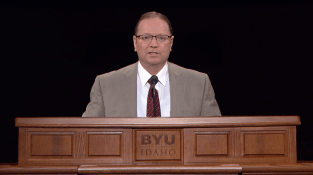 I spoke at the weekly devotional at BYU-Idaho this past week. (See the 3rd tab near the top of this page.)
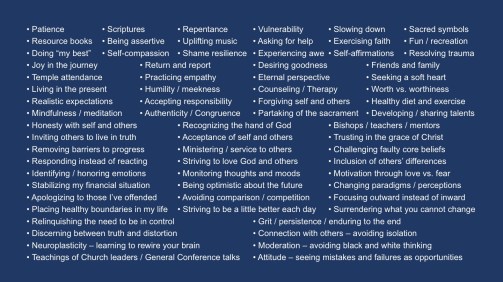 The list of 70 that I showed might seem overly long. If I’d had time to choose one more for the talk, it would have been Counseling / Therapy. It’s a huge area that’s so often overlooked because of the stigma associated with needing to see a “shrink.”
 Imperfect Guy