Confessions of a Recovering Perfectionist – Part 13

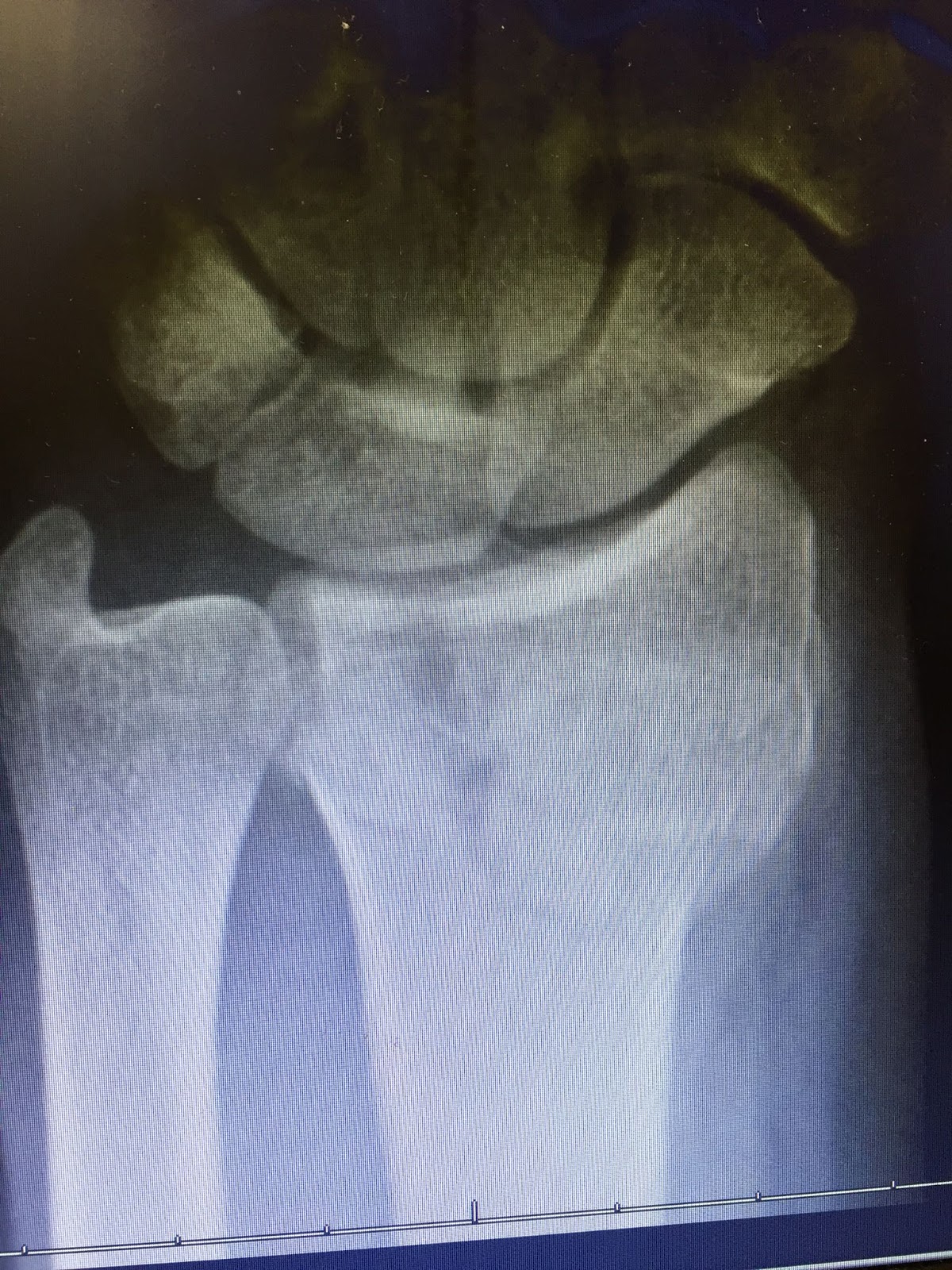
Last month I broke my wrist.  I’d like to say I broke it snowboarding and doing 360’s or fighting off martial artists, but you probably know me better than that.  I was walking in the parking lot, slipped on the ice, and put out my hand to catch myself.  I’ve lived in Rexburg for over 30 years and slipped on ice numerous times, but this is the first time I’ve broken a bone here.  


The attending physician looked at the x-rays and pronounced it broken—in a few pieces.  He said I would likely need to have pins, screws, or plates installed.  He gave me a prescription for a narcotic and sent me home.  


The next morning I had an appointment with the orthopedic surgeon.  He took more x-rays and said he thought he could put the bones in place and cast it, thus avoiding surgery.  I readily agreed.  He told me to clench my jaw, then he twisted and tugged a bit while I yelled in pain.  But at least I didn’t have to go under the knife.  


So I ended up in a cast for several weeks.


When this initially happened, I thought about how inconvenient it would be to live one-handed.  My thought was, “Why me?”  Didn’t God know how much I had on my plate?  This could really cramp my style!  


But then I remembered that the “why” questions are pretty useless.  Instead, I asked, “What is God trying to teach me through this?”  And there are at least the following two things I’ve learned through it.  


It’s OK to ask for help.  
I tend to be quite self-sufficient and Ive viewed asking for help as an indication that I’m less capable.  But it’s really hard to do some things with one hand:  button up my shirt (especially the top button), put on a tie, put on my seatbelt, open a bag of tortilla chips, slice a tomato, unscrew the lids on so many containers, shave, change a lightbulb, type on a keyboard, etc.  Plus, I’m not supposed to get the cast wet, so I can’t do dishes.  And I have to put it in a plastic bag when I take a shower.  All of this means I have to ask others for help.  Part of the challenge is that I don’t want to impose on others, because I know we are all busy and have our own things to do.  But the other part of it is a pride issue.  


When I’m doing things with one hand, everything seems to take so much longer.  Which brings me to the second thing I’ve learned.


It’s good to slow down.  
I’m the type of person who is always trying to be productive and efficient.  Always trying to get more done.  I like it if I can “kill two birds with one stone.”  Hey, why not three … or more?  I’m quite impatient.  Let’s get this wrist thing out of the way and over with so I can get on with life.  


“Be still and know that I am God,” the Lord entreats.  So I’ve taken a bit of time off work.  And I have to be careful not to lift or pull.  This means I’ve often needed to just sit still and keep my wrist elevated.  I’ve discovered mindfulness/meditation.  I’m learning to live in the moment.  I can just be conscious of the world around me, and not be always planning what I’m going to do next.  I can sit and visit with someone.  


These two concepts are at odds with my past perfectionistic way of life.  But the change feels good.  It actually feels like I’m being more productive, while being less productive—if that makes sense.  I’m learning some great things, while taking it easy.  
To be continued . . . with Part 14.

Confessions of a Recovering Perfectionist – Part 12

I’d like to return to a topic I discussed in Part 3—Shame.  Brené Brown, who I consider to be one of the foremost experts on shame research, teaches that “the less we talk about shame, the more we have it.”  Conversely, the more we talk about it, the less we have it.  So let’s talk some more about it.


Brené Brown defines shame as “the intensely painful feeling or experience that we are flawed and therefore unworthy of connection or belonging.”  By identifying shame and acknowledging it in my life, I take the first step toward managing shame instead of letting shame manage me.  


Everyone experiences shame, but when I am subjected to it on a regular basis without the chance to rebuild trust, I internalize it and it becomes toxic.  


The other foremost expert on shame is John Bradshaw.  His book “Healing the Shame that Binds Us” is a New York Times #1 Bestseller and has helped millions identify their personal shame, understand the underlying reasons for it, address these root causes, and release themselves from the shame that binds them to their past failures.


Rather than summarize Bradshaw’s teachings here, I highly recommend that you simply watch his video of the same name as his book.  It consists of six segments, each one less than 10 minutes in length.  So in less than an hour, you can watch them all on YouTube.  Set aside an hour when you can focus.  Start with Part 1 and then continue with the other five.  Hes not only very knowledgeable, but hes also a dynamic and engaging presenter.


One difference between the teachings of Brené Brown and John Bradshaw is that Bradshaw differentiates between “healthy shame” and “toxic shame.” Brené, on the other hand differentiates between “guilt” and “shame.”  I prefer this distinction, since I feel that shame is never healthy.  Guilt, however, can be beneficial when it causes us to repent. (See Alma 42:29)

I remember when someone first suggested that perhaps I might be experiencing some shame, based upon my reactions to some incidents.  I was in complete denial—not because I disagreed with the diagnosis, but because I was oblivious to shame and its effects.  How grateful I am now that I can recognize it for what it is, and that I am learning to be shame resilient.  

To be continued .. . with Part 13.

Confessions of a Recovering Perfectionist – Part 11

Joseph Smith, in Lectures on Faith wrote:
“Let us here observe, that three things are necessary in order that any rational and intelligent being may exercise faith in God unto life and salvation.
1. First, the idea that He actually exists.
2. Secondly, a correct idea of His character, perfections, and attributes.
3. Thirdly, an actual knowledge that the course of life which he is pursuing is according to His will.”  
(Joseph Smith, Lectures on Faith, 3:2-5)


As I’ve encountered this teaching over the years, the first two points are great and I believe I can comply with them.  It’s the third point that has given me cause to hesitate: A knowledge that the course of life I am pursuing is in accordance with His will.  


This is an interesting consideration.  Does this mean that I need to be perfect?  No.  It means that my journey is acceptable to God.  I believe that every positive step on that journey, every effort I make is pleasing to God, and in accordance with His will for me at that point in my progression.  


He doesn’t expect me to run faster than I have strength.  He wants me to progress line upon line, precept upon precept, here a little, there a little.  (See 2 Nephi 28:30 and Isaiah 28:13.)


Here’s a concept that was stated by Pres. Lorenzo Snow, Pres. Joseph Fielding Smith, Pres. Thomas S. Monson, and Elder David A. Bednar (and most recently in last October Conference by Elder Larry A. Lawrence) about just becoming a little better each day:


Pres. Lorenzo Snow:  “Do not expect to become perfect at once.  If you do, you will be disappointed.  Be better today than you were yesterday, and be better tomorrow than you are today.”  (Teachings of Presidents of the Church: Lorenzo Snow, Chapter 6.)


Pres. Joseph Fielding Smith:  “It is our duty to be better today than we were yesterday, and better tomorrow than we are today.”  (Teachings of Presidents of the Church: Joseph Fielding Smith, Chapter 18.)


Pres. Thomas S.  Monson:  “In the search for our best selves, several questions will guide our thinking: Am I what I want to be? Am I closer to the Savior today than I was yesterday? Will I be closer yet tomorrow? Do I have the courage to change for the better?”  (General Conference, Oct. 1999)


Elder David A. Bednar:  “If today you are a little bit better than you were yesterday, then that’s enough. And, if tomorrow you are a little bit better than you were today, then that’s enough.”  (Facebook Post)


I also like this statement by Brigham Young. He is often seen as a very strict and rigid man, when it comes to keeping commandments, so this seemed out of character:  
“It may appear strange to some of you, and it certainly does to the world, to say it is possible for a man or woman to become perfect on this earth.  It is written, ‘Be ye therefore perfect, even as your Father which is in heaven is perfect.’ If this passage is not worded to our understanding we can alter the phraseology of the sentence, and say, ‘Be ye as perfect as ye can,’ for that is all we can do, though it is written, be ye perfect as your Father who is in heaven is perfect. . . . When we are doing as well as we know how in the sphere and station which we occupy here, we are justified in the justice, righteousness, mercy, and judgment that go before the Lord of heaven and earth. We are as justified as the angels who are before the throne of God. (Discourses of Brigham Young, 89).


To me, that helps me to know that if I’m getting a little better every day, then that’s all the Lord expects of me — the course of life I’m pursuing is in accordance with His will.  And this should enable me to exercise greater faith in Him.  
To be continued . . . with Part 12.

Confessions of a Recovering Perfectionist – Part 10

For a perfectionist, creating New Year’s resolutions is an interesting prospect.  Because I tend to see things in extremes, I’ll either set very optimistic, even unrealistic goals.  Or I’ll settle into setting goals that are quite comfortable, that I know I can easily reach.  In my younger years I would typically choose the former.  Now that I’m older, I lean toward the latter.  


new_years_resolutions_list.jpgPerfectionism sometimes causes me to avoid trying new things because of the fear of failure.  Letting go of the need to be perfect can give me the courage to try these things because failing at them is OK.  


It may be helpful to think of FAIL as First Attempt In Learning.  


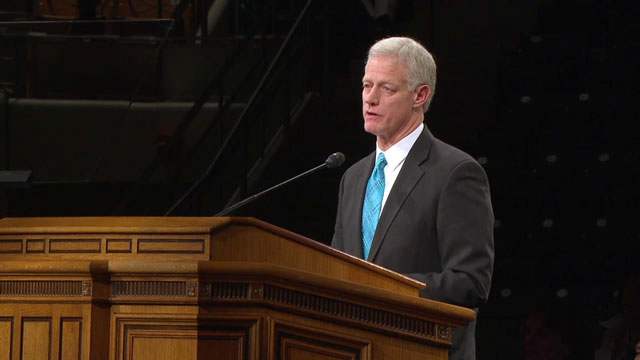
I’m so impressed with I talk I recently read; I’d like to share some things that stood out to me.  This talk was given at a devotional earlier this year by Kevin J. Worthen, President at BYU.  It’s called Successfully Failing: Pursuing Our Quest for Perfection.  These quotes are taken from the text of the talk:


Failing is an essential part of the mortal phase of our quest for perfection. We don’t often think of it that way, but that is only because we tend to focus too much on the word perfection and not enough on the word quest. Failure is an inevitable part of the quest. In our quest for perfection, how we respond when we fail will ultimately determine how well we will succeed.

Failing is a critical component of our eternal progress—our quest for perfection. And because of the Atonement we can—if we respond to failures in the right way—be blessed with a new kind of learning that allows our failures to become part of the perfecting process. As Elder Bruce C. Hafen has explained, the beauty of the gospel is that “because of the Atonement, we can learn from our mistakes without being condemned by them.” What a wonderful blessing that absolutely marvelous and indispensable portion of the plan of salvation provides to each of us, if we will but take advantage of it.

worthenk.jpgIn our own personal lives, willful failure in important, routine things we can control constitutes sin, which we should avoid as much as possible. In things that are routine but essential to our eternal progress—things like daily prayer, daily scripture study, and regular church attendance—we should strive to eliminate all failings. In these matters we can come very close to perfection very quickly, and it is important that we do so, because success in these endeavors provides the secure foundation that allows us to deal effectively with the other two kinds of failure.

We should not be so fearful of failing that we avoid trying new or hard things merely because their very newness or difficulty increases the risk of failure. Don’t let concern for protecting your grade point average dictate the courses you take. Challenge yourself, academically and in other ways. You may discover skills, talents, and joys you would otherwise miss out on. Your mortal experience will be a more productive part of your quest for perfection if you intentionally stretch yourself with new challenges, especially those that involve a real risk of failure.

Finally, we can be assured that however we have failed, it can, from an eternal perspective, be changed. The Atonement is that powerful and that comprehensive. As Elder Jeffrey R. Holland put it: 


If you are lonely, please know you can find comfort. If you are discouraged, please know you can find hope. . . . If you feel you are broken, please know you can be mended.

Because of the Atonement, all failures are changeable and temporary, except the one that occurs when we give up. So whatever you do, don’t you dare give up.

Too often we ask the wrong question when we fail. We ask, “Am I good enough?” But the real question is, “Is God good enough?” Is He as good as He says He is? Can He really deliver on His promise that “all things” will “work together for [our] good” if we will trust Him and strive to do the best we can and keep going whenever we fall short?
I testify that He is. God is as good, as powerful, as loving, as patient, and as consistent as He says He is. He gave His Son so that we might move forward in our quest for perfection with full confidence and assurance that we will succeed despite our failures.


What powerful truths!  This talk puts me in the right frame of mind to create my resolutions.  I won’t be so afraid to try new or difficult things, because even if I fail, I’ll be learning valuable lessons in the process.  

I also really love this quote by Pres. Monson: Our task it to become our best selves. One of God’s greatest gifts to us is the joy of trying again, for no failure ever need be final.  

To be continued . . . with Part 11.

Confessions of a Recovering Perfectionist – Part 9

Sometimes it’s hard to see that I actually am making progress in my struggle with perfectionism, that I really am “in recovery.”  So when I see evidence, it’s healthy for me to acknowledge it and to also recognize from whence those positive changes come—the Lord changing my heart.  Here are a few instances where I’ve recently seen the hand of the Lord in my life:


The Isaiah Chapters
In the past when I’ve read the Isaiah chapters in 2 Nephi, I’ve approached them with apprehension.  It seems that the main theme was God’s fierce anger and how He would burn the wicked as a stubble.  Of course, I always included myself among the wicked, because I wasn’t perfect.  But this time, I got a whole different message from these chapters:  The Lord would be born of a virgin—the Prince of Peace and Light of the World, He would gather scattered Israel, restore His gospel—a marvelous work and a wonder, build a latter-day temple, and bring a peaceful millennium where the earth will be full of the knowledge of Him.  I didn’t really plan to see these chapters differently, it just happened.  I saw more of the “good” prophecies.  


Music in My Life
I’ve always been musical.  Growing up, my family members all sang and played musical instruments.  I played the trombone in the band since 6th grade through high school, including marching band, pep band, concert band, and jazz band.  I sang in the concert choir and madrigal group in high school.  My brothers and I sang a lot of barbershop.  I was assistant director of the choir in college.  I sang with the BYU Young Ambassadors (thats me just left of center in the photo) and in the Mormon Youth Chorus.  I wrote songs and recorded an album that was distributed by Deseret Book.  I directed a fireside singing group Listen, a Christmas performing group Spirit of the Season, and a vocal jazz group Singcopation for many years. And I was the Ward Choir Director for over four years.


All this time I’ve approached music from primarily a left-brain stance.  I would notice the choral structures, the instrumentation, the rhythms, the order of the pieces in a program, etc., for the most part analyzing the music.  


But lately I’ve experienced music in a more aesthetic way.  I notice the beauty, the message, the spirit, and the way it makes me feel.  This is new to me.  It’s more creative and less intellectual.  I really like it.  


Self Worth
Because my primary love language is words of affirmation, I have tended to crave praise and verbal “pats on the back.”  If I accomplished something and nobody mentioned that I had done a “good job,” I’d wonder about my self worth.  I would easily become defensive if I felt someone was being critical of me.  


It’s a pride issue and I’m not claiming to be over it.  But it’s not as important to me as it used to be.  The more I feel good about myself—that I’m valuable just the way I am—the less I need to rely on the praise of the world to give me my sense of worth.  


The Race of Life
Here’s a great quote I like by Pres. Uchtdorf:  “This race of discipleship is not a sprint; it’s a marathon. And it makes little difference how fast we go. In fact, the only way we can lose the race is by finally giving in or giving up. As long as we continue to rise up and move toward our Savior, we win the race with our torches burning brightly. For the torch is not about us or about what we do. It is about the Savior of the world. And that is a Light that can never be dimmed. It is a Light that swallows the darkness, heals our wounds, and blazes even in the midst of the deepest sorrow and unfathomable darkness.”

To be continued . . . with Part 10.

Confessions of a Recovering Perfectionist – Part 8

As I watched General Conference earlier this month, I listened for particular teachings that might address the kinds of issues and challenges that might benefit us perfectionists.  Here are gems from three of my favorites:


Sister Neill F. Marriott and her family chose this family motto:  “It will all work out.”  She says, “Our family motto doesn’t say, ‘It will all work out now.’  It speaks of our hope in the eternal outcome—not necessarily of present results.  Scripture says, “Search diligently, pray always, and be believing, and all things shall work together for your good.”  This doesn’t mean all things are good, but for the meek and faithful, things—both positive and negative—work together for good, and the timing is the Lord’s.”  


She also taught:  “Some may think they have failed too many times and feel too weak to change . . .  However, as covenant Israel, we don’t just try and try on our own to change.  If we earnestly appeal to God, He takes us as we are—and makes us more than we ever imagined.  Noted theologian Robert L. Millet writes of ‘a healthy longing to improve,’ balanced with the spiritual ‘assurance that in and through Jesus Christ we are going to make it.’”


Elder Larry R. Lawrence quoted President Harold B. Lee:  “Every one of us, if we would reach perfection, must [at] one time ask ourselves this question, ‘What lack I yet?’”


“The Holy Ghost doesn’t tell us to improve everything at once.  If He did, we would become discouraged and give up.  The Spirit works with us at our own speed, one step at a time, or as the Lord has taught, ‘line upon line, precept upon precept.’”


“The Spirit can show us our weaknesses, but He is also able to show us our strengths. Sometimes we need to ask what we are doing right so that the Lord can lift and encourage us. . . . Our Heavenly Father knows our divine potential.  He rejoices every time we take a step forward.  To Him, our direction is ever more important than our speed.


“Be persistent, brothers and sisters, but never be discouraged.  We will have to go beyond the grave before we actually reach perfection, but here in mortality we can lay the foundation.  ‘It is our duty to be better today than we were yesterday, and better tomorrow than we are today.’”


Elder Dale G. Renlund spoke several things that resonated with me.  Because I have experienced the numbing of my emotions, I related to his description that “I developed a kind of emotional distance when things went poorly.  That way, feelings of sadness and disappointment were tempered.”


“I now realize that in the Church, to effectively serve others we must see them through a parent’s eyes, through Heavenly Father’s eyes.  Only then can we begin to comprehend the true worth of a soul.  Only then can we sense the love that Heavenly Father has for all of His children.  Only then can we sense the Savior’s caring concern for them.  We cannot completely fulfill our covenant obligation to mourn with those who mourn and comfort those who stand in need of comfort unless we see them through God’s eyes.”


I guess the reason I like these teachings is because they give me hope—hope that I don’t need to do it all . . . right now . . . on my own.  I love to hear God’s servants.  Their words encourage and uplift me.  They strengthen my faith.  I testify that they speak light and truth.  


To be continued . . . with Part 9.

Confessions of a Recovering Perfectionist – Part 7

One of the interesting things about perfectionists is that most of us don’t even realize our thinking is faulty.  We assume that everyone else feels the same way about striving to be perfect.  


A friend recently shared with me this story:


“When I was a college student, I met regularly with a campus counselor.  On one of our visits, he read to me this narrative:


Patty Perfect hails from Salt Lake City, Utah.  She’’s married and has ten children.  Even though she’’s a stay at home mom, she manages to keep busy.  Her typical day begins around 5:30am when she gets up and reads nine chapters from the scriptures.  After jogging twelve miles, she’’s home in time to make a hearty, healthy breakfast and oversee the practicing of musical instruments by her children.  Once breakfast is over, family scripture study completed, children and husband sent off to school and work, Patty takes the five younger children with her as she does her visiting teaching.  Arriving home in time for lunch, she saves time by also preparing the week’’s dinners in advance while the smaller children teach each other the alphabet.  Then the children go down for naps while Patty has a few moments to herself.  She likes to spend her free time sewing clothes for the whole family and baking whole wheat bread.  As the older children arrive home from school, she treats them to milk and freshly-baked cookies before helping them with their homework and science fair projects. Her favorite time of the day is when she’’s cleaning the house because “cleanliness is next to godliness.”


“The counselor then asked me, ‘What’s wrong with that story?”  I answered, ‘Uh . . . I don’t see anything wrong with it.  It sounds like she’s really got her life in order.   That’s the kind of person I’d like to be!’  He responded, “Well . . . I can see we’ve got work to do.”  


It wasn’t obvious to my friend how totally unreachable the bar was that she had set for herself.


When I was a bishop I had several ward members come to me with these same feelings and I would always give them the pep talk:  “It sounds like you’re being really hard on yourself.  I think you need to be a little more self-compassionate.  You don’t have to be perfect to be worthy . . .”  But it was difficult to apply those same ideas to myself.  It seems that we often can see others as candidates for heaven, but not ourselves.  


For most of my life, I didn’t see my own perfectionism.  I didn’t see my self-expectations as overly high.  The thing that finally helped me to identify perfectionism was the persistent and deep feelings of guilt, shame, and unworthiness.  


Another thing that has helped me is to recognize black & white thinking.  If I were to start to list the expectations I have of myself, I’d probably see words like “always,” never,” “all,” “every,” etc.  It could look like this:  Attend the temple every week.  Visit all of my home teaching families during the first half of the month.  Never engage in gossip or backbiting.  These words show that I’m being extreme in my thinking.  


As I’ve learned to more readily recognize when expectations are unrealistic, I’m able to effectively use “shame resilience” techniques.  And I’m better able to hear the whisperings of the Spirit reconfirming my divine worth.


The Spirit can help us learn to see “things as they really are.”  (Jacob 4:13)

To be continued . . . with Part 8.

Confessions of a Recovering Perfectionist – Part 6

Recently, for our weekly date night, my wife and I attended the popular Disney-Pixar animated film, Inside Out.  We loved it!  Not only was it very entertaining; it was also quite instructional.  It illustrated the significance emotions play in our day-to-day lives.  


Numbing Emotions
In Part 3 of this blog I wrote about the fact that we sometimes tend to numb our emotions, to avoid feeling pain and discomfort.  (See also Of Wounds and Walls in Part 5.)  As children, we were sometimes taught that it’s not OK to express our emotions.  “Don’t be a scaredy cat!”  “Big boys don’t cry!”  “Don’t be angry at your sister!”  So it’s easy to see why it became easier to just suppress those emotions.
I’ve lived the major portion of my life quite numb to my emotions.  It resulted in the inability to connect deeply with others.  


I remember once years ago when a friend of mine, realizing that I had difficulty attaching in relationships, recommended that I read the book “Human Intimacy” by Dr. Victor L. Brown, Jr.  I started reading it and it was like a foreign language, Greek to me.  I had no peg to hang it on.  I got nothing out of it except maybe feeling more shamed.  I was so numb emotionally, I was intellectualizing, trying to understand something in my head, not able to get it into my heart.  Others might try over and over to explain these concepts to me, but for someone so numb, it just doesn’t penetrate.  There’s no way to internalize it.  That was me.  


The Spirit of God Works Through Our Feelings  
Spiritually, there’s a problem with being so numb.  The still, small voice can’t get through very much.  Here’s how it might happen for a perfectionist:


I try to do my best to keep all the commandments.  I do all of the basics religiously — read my scriptures, pray, hold Family Home Evening, attend my meetings, serve others, etc.  And I’m hoping to feel joy.  


But because I’m numb to me emotions, I’m not getting any spiritual nourishment.  Those things become more and more frustrating.  


So I decide that I must need to read an extra chapter in the scriptures every day, fast twice a month instead of just once a month, pray harder, go to the temple more often . . .


I’m doing all of the “primary” expectations, but I’m not getting anything.  I want it to be a cure all but is’t not working.


One of the problems with not being able connect with others, is that I also am not able to connect well with the Lord.  Maybe there’s been a father-injury.  We not only experience that with our earthly fathers, but we also can experience that with our Heavenly Father.  Often times there’s resentment.  


And to avoid feeling pain, we sometimes go into promise-making:  “God, if I do these five things that I’ve been counseled to do time and time again, and do them religiously and without fail (taking that perfectionistic stance), then you will reach down and remove this adversity from me.  And then I’ll know you exist.  Then I’ll be more faithful, more certain in my faith.”


But that doesn’t work very well.  That’s not His way.  


Certainly, in certain circumstances He could do that.  But to develop that intimacy with Him, He wants us to come to Him in meekness, in humility, not demanding certain outcomes.  He wants us to recognize our absolute dependence on Him.  This is at odds with our perfectionism.  We feel like we need to be perfect, to be self-sufficient (self-righteous) before we can approach Him.


The Paradox
I love the teachings of Pres. Uchtdorf about our relationship with God:


“While we may look at the vast expanse of the universe and say, ‘What is man in comparison to the glory of creation?’ God Himself said we are the reason He created the universe! His work and glory—the purpose for this magnificent universe—is to save and exalt mankind (see Moses 1:38–39). … Our Heavenly Father created the universe that we might reach our potential as His sons and daughters.


“This is a paradox of man: compared to God, man is nothing; yet we are everything to God. While against the backdrop of infinite creation we may appear to be nothing, we have a spark of eternal fire burning within our breast. We have the incomprehensible promise of exaltation—worlds without end—within our grasp. And it is God’s great desire to help us reach it” (Dieter F. Uchtdorf, “You Matter to Him,” Ensign, Nov. 2011, 20).

As I learn to identify, honor, and appropriately express my emotions, I open up myself to the possibility of feeling true joy. I also allow myself to feel Gods Spirit more in my life.
To be continued . . . with Part 7.

Confessions of a Recovering Perfectionist – Part 5

I’m on my stake High Council, which means I speak at each of the wards in the stake once a year.  In my preparations for speaking I typically contact the bishop and ask if there is a particular topic he would like me to address.  Usually they say to just talk about whatever I’ve been studying.  I make it a matter of prayer so I can hopefully do the Lord’s will in each instance.  Every time this year so far, I’ve been able to choose my own topic.  And since Perfectionism has been a major part of my study lately, in each ward I’ve felt impressed to speak on Perfection.  


It isn’t your typical High Council talk.  It’s quite soul-baring for me, since I’ve lived in this stake for more than 20 years and know many of these people.  I basically share my story (see Part 1 of this blog) and then supplement it with scriptures and illustrations, as I feel prompted.  


It’s remarkable to see how many people talk with me afterward saying essentially “You really get me,” and asking for a copy of the talk.  So I point them to this blog.  


When I feel that someone understands me, there’s an immediate connection with that person.  In our interactions we can usually skip from square one to square two or three.  So as these people look me in the eye, I see deeper than I normally would.  


Here are a few examples of what has happened as a result of these speaking assignments:


A sister emailed me and said that she “desperately needed” the message.  She suffers from PTSD as well and had been experiencing flare ups.  She was grateful to know that someone else understands some of what she is going through.


A bishop’s wife told me that the talk was “an answer to prayer.”  Their son is very talented and smart.  But it seems like it is “never good enough” for him.  They had known about their son’s challenge for some time, but didn’t have a name for it and didn’t know how to help him.  They had been praying for help.  He has since been meeting with a therapist and is progressing.  


Right after the closing prayer, a young man came up to me and asked if I would give him a priesthood blessing.  I must have hesitated because he said, “Your talk was my life story.  I trust you to give me a blessing, because you understand me.”  I asked, “Right now?”  “Yes,” he replied.  We found a room in the building that was vacant and his wife joined as I gave him the blessing.  Because I have such strong feelings about this issue, I was afraid that I might say what I wanted him to hear and not what the Lord wanted me to say.  But I felt that the words were inspired.  We all cried.  Afterward, we talked for awhile.  I agreed to be a mentor for him and we have met since to discuss his challenges and progress.  (Disclaimer:  I have not received any training as a therapist or a counselor.  So my mentorship is based solely on my own research and experience.)  


One thing I learned from this experience with this young couple:  As much of a challenge as this is for the perfectionist, it is equally challenging for the spouse.  Because I had been numbing my feelings for years, my wife was experiencing a husband who was detached emotionally.  Where does that detachment and lack of connection come from?  


Here’s how the story played out for many of us:


Of Wounds and Walls
Because of childhood wounds, we saw the world as an unsafe place.  And so we built walls to protect us from the pain.  These wounds and walls were often subconscious.  We weren’t aware of what was happening and were too young to understand it.


The wounds caused us to start to numb ourselves to the pain.


The walls caused us to isolate ourselves.  We lost the ability to bond, attach, and connect with others.  We felt flawed, broken, defective, and unlovable.


We moved in to survival mode.


We created false selves—masks, facades, projections of a happy and “good” kid.


We worked hard to appear like everything was OK, like we had it all together.  


All the while, we felt more and more ashamed of who we were.


Learning to Be Authentic
To learn to live authentically, we needed to make changes both internally and interpersonally.


Internally, we needed to become whole within ourselves and accept ourselves totally, rather than repressing, or hiding parts of ourselves. It required the capacity to feel and tolerate the full range of our own feelings, which can sometimes seem conflicting, confusing, and painful.  And it required the ability to integrate these feelings, along with our beliefs about ourselves, others, and the world into a personality that could meet the challenges of life and relationships.


Interpersonally, we needed to develop the ability to be fully present and assertive in relationships to the degree appropriate and to respond out of our genuine selves in those relationships.


This entire process required facing fear in a profound and new way. We had to let down our defenses in order to re–enter internal conflicts that we had previously considered too painful to touch. And we needed to venture into the areas where illogical, uncomfortable, and unpredictable emotions exist.


We then began to carry our newfound assertiveness and clarity into the real world of relationships. We begin to allow others to see our feelings in the present. We become able to reveal ourselves to others and stay in relationships rather than defensively detaching.


To be continued . . . with Part 6.

Confessions of a Recovering Perfectionist – Part 4

Perfectionism is not so much a physical affliction, but an affliction of the mind and the heart.  To recover from this affliction, we need healing in both the heart and the mind.  

Healing in the Heart
About a month ago I had a very emotionally intense experience.  (The experience is a whole ‘nother story, which I may write about at some time in the future.)  It was heart-rending and heart-healing.  I was able to face some core emotions that had been blocking my progress.  As a result, since then, I’ve been better able to recognize the difference between the old stoic intellectually-motivated man, and the new learning-to-be-open-hearted man.  I find myself being more heart-felt in my responses to others.  I enjoy feeling this way.  This is progress.

President Boyd K. Packer taught the following powerful idea: “True doctrine, understood, changes attitudes and behavior. The study of the doctrines of the gospel will improve behavior quicker than a study of behavior will improve behavior.” (Boyd K. Packer, “Do Not Fear,” Ensign, May 2004, 77.)  

I’d like to emphasize the “understood” part of the above quote.  For most of my life I thought that understanding was what happened in my head—intellectually.  But the scriptures teach that understanding really happens in our hearts.  (These scriptural examples were cited by Elder Bednar in a Ricks College Campus Education Week Devotional in June of 1999.)

  • Who hath put wisdom in the inward parts? Or who hath given understanding to the heart? (Job 38:36)
  • My mouth shall speak of wisdom; and the meditation of my heart shall be of understanding. (Psalms 49:3)
  • So that thou incline thine ear unto wisdom, and apply thine heart to understanding. (Proverbs 2:2)
  • Ye have not applied your hearts to understanding; therefore, ye have not been wise. (Mosiah 12:27)
  • . . . but that you should hearken unto me, and open your ears that ye may hear, and your hearts that ye may understand, and your minds that the mysteries of God may be unfolded to your view. (Mosiah 2:9)
  • And the multitude did hear and do bear record; and their hearts were open and they did understand in their hearts the words which he prayed. (3 Nephi 19:33)

So, although I previously had a cognitive knowledge that I’m God’s son and that He loves me, I didn’t really understand it until I started feeling it in my heart.  

Healing in the Mind
We know that the Savior can heal our heartsHe said that He is come to bind up the brokenhearted.  But we also need him to heal our minds.  

When Joseph Smith was in the Liberty Jail, the Lord told him:  “Let virtue garnish thy thoughts unceasingly; then shall thy confidence wax strong in the presence of God; . . .  The Holy Ghost shall be thy constant companion, and thy scepter an unchanging scepter of righteousness and truth.” (D&C 121: 45-46)
I love what Elder Holland has to say about this:  “Let virtue garnish thy thoughts unceasingly.  That is . . . good counsel . . . for all kinds of gospel thoughts, good thoughts, constructive thoughts, hopeful thoughts.  Those faith-filled thoughts will alter how you see life’s problems and how you find resolution to them.  “The Lord requireth the heart and a willing mind,” (D&C 64:34) the revelations say.  Too often we have thought it was all up to the heart; it is not.  God expects a willing mind in the quest for happiness and peace as well.  Put your head into this.  All of this takes effort.  It is a battle but a battle for that is worth waging.  (Elder Jeffrey R. Holland, “Living after the Manner of Happiness,” BYU-Idaho Devotional, 23 Sep 2014.)

Those of us with perfectionism often have “stories”thoughts, beliefsthat we tell ourselves, but which are distressing and keep us from progressing.  These are mental.  So understanding how to challenge those stories can be helpful in getting past the blockages.  I recently found the work of Byron Katie which teaches a simple method for allowing us to identify and question these old stories.  I highly recommend it.  

The Lord does require both the heart and the mind in our efforts to come unto Him.  

To be continued . . . with Part 5.