Confessions of a Recovering Perfectionist – Part 24

This is Part 24, which means I’ve been posting to this blog every month for two years.  Over the past few months, I’ve been noticing that I’m having fewer issues with perfectionism than I had in the past.  If this keeps up I may need to stop writing this blog, since the initial premise was to document what I’m learning about my perfectionism.


In other words, I’m progressing, getting healthier, in recovery, doing my work, trusting the process.  My therapist is also noticing my improvement.  If this keeps up, I may need to stop seeing him as often.  


So if I’m having fewer issues, why is that?  To what can I attribute my progress?  


Ultimately, I give the Lord the credit.  He led me to my therapist.  He brought healing resources into my life.  He is changing my heart and mind.  There are many factors contributing to my improved emotional health surrounding perfectionism, but I glorify God for the tender mercies.


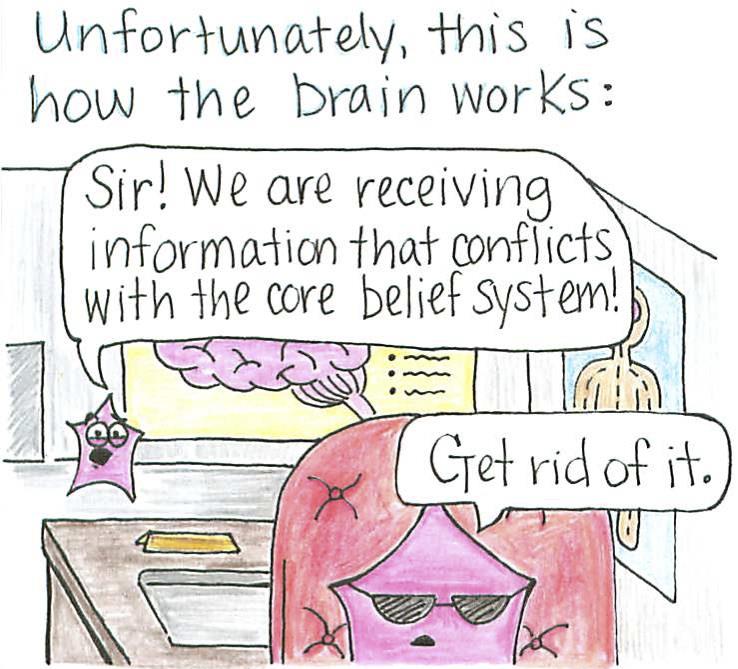
From a therapeutic standpoint, I’d have to say that the most significant help has been an understanding of faculty core beliefs and how they have affected me for most of my life.  Faulty core beliefs usually develop at a young age and are sometimes unconscious.  So identifying them is an important part to overcoming them.  


Faulty: false
Core: about our souls
Belief: how we perceive and value


Typical faulty core beliefs are:
I’m not _______ enough.  (Insert the adjective — good, smart, thin, happy, rich, young, etc.)
I’m not loveable.
I’ll never get it right.
I’m not worthy.
I’m inadequate.
I’m bad.
I’m defective.


The interesting thing is: these are not just faulty thoughts, but faulty beliefs.  Intellectually, I get the fact that I’m smart, worthwhile, valuable, and good.  But beliefs are beyond just my thoughts; they are seated in my emotions.  So while I might have a cognitive understanding of my value, I have a hard time believing it.  It’s a head vs. heart problem.  


If it is my belief that I am flawed in some way, regardless of any proof I may have to the contrary, that belief becomes my truth and I will behave in a way that validates my perception of reality.


Faulty core beliefs are also closely tied to shame.  That’s why my therapist has worked with me on becoming shame-resilient while we have also been working on improving my core belief system.


As I’m doing my work, I’m less perfectionistic.  I have a healthier outlook for the future.


Actually, to think I won’t have issues with perfectionism in the future is idealistic.  It’s difficult to change something that has been so ingrained for so many years.  But the fact is, I’m experiencing less suffering than in the past.  I’m in a better place now than I’ve ever been.

To be continued . . . with Part 25

Confessions of a Recovering Perfectionist – Part 23

Pride and Perfectionism
Perfectionism is tied to self-worth.  If I can just do things perfectly then I can feel better about myself.  


Prophets have taught that we are a royal generation, for generations.  That we have been saved for these last days to come forth when our gifts and abilities are most needed.  


My patriarchal blessing says that I was one of the valiant in the premortal life. My wife’s says that she will marry a noble son of our father in Heaven.  


So with all of this evidence about my greatness, why have I still suffered from low self-worth?  You’d think it would be the opposite.  You’d think I would suffer from pride and a sense of my “specialness.”  Actually, I do.  President Ezra Taft Benson taught that “pride is the universal sin, the great vice.”  And we perfectionists definitely have our issues with pride.  Because I feel bad about myself, then I need to build myself up.  


Comparing and Competing
As a kid, it shows up in boasting and bragging about my accomplishments.  Comparing and competing become important ways for me to demonstrate that I measure up.  As an adult, it’s the same thing.   


For guys, all sorts of competitions are great ways to show how “good” I am at something—sports being the most prevalent.  And even if I’m not good at football or hockey or car racing, I can still feel good about myself if my team wins.  I get to vicariously win.  And that makes me feel good about myself.  Similarly, my ability to get a high-paying job and provide well for my family are indications of my worth.  The need for “keeping up with the Joneses” is huge among perfectionists.  


For gals, it’s often about appearance—the clothes I wear, being thin, using the right shade of eye shadow.  Competing in pageants and programs, making the dance team or cheerleading squad, being asked to the prom by a cute guy—these show others that I am “good.”  As a wife and mother, keeping my home well-decorated and immaculately clean are significant.  Making sure that my children appear well-behaved and above normal are reflections on myself.  Thus, I need to enroll them in all kinds of after-school activities so they can have the advantages I never had when I was their age.  


I’m not saying that sports are bad, or that keeping a lovely home is bad.  It’s comparing that can create the problem.  


The Pride Cycle
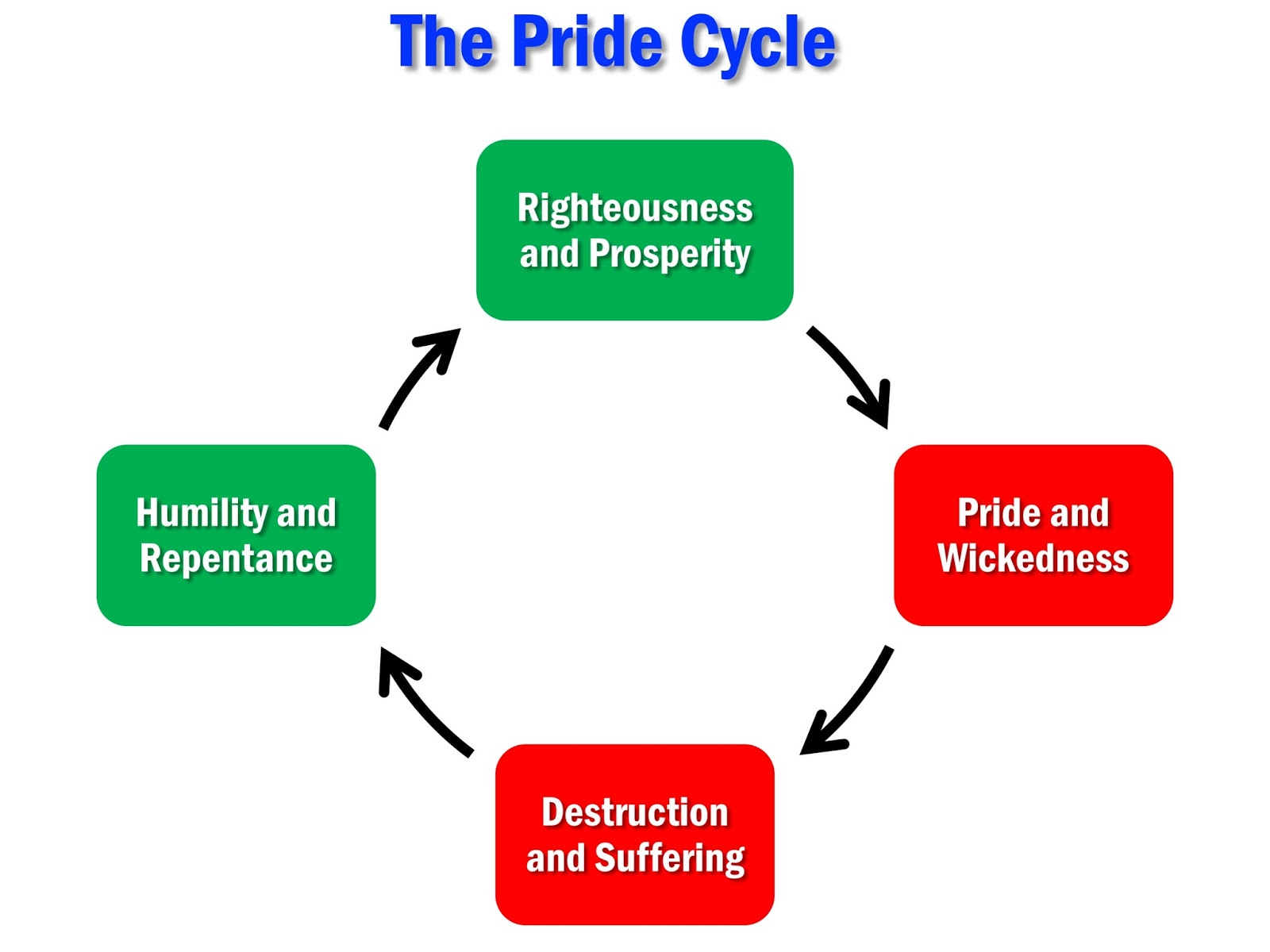
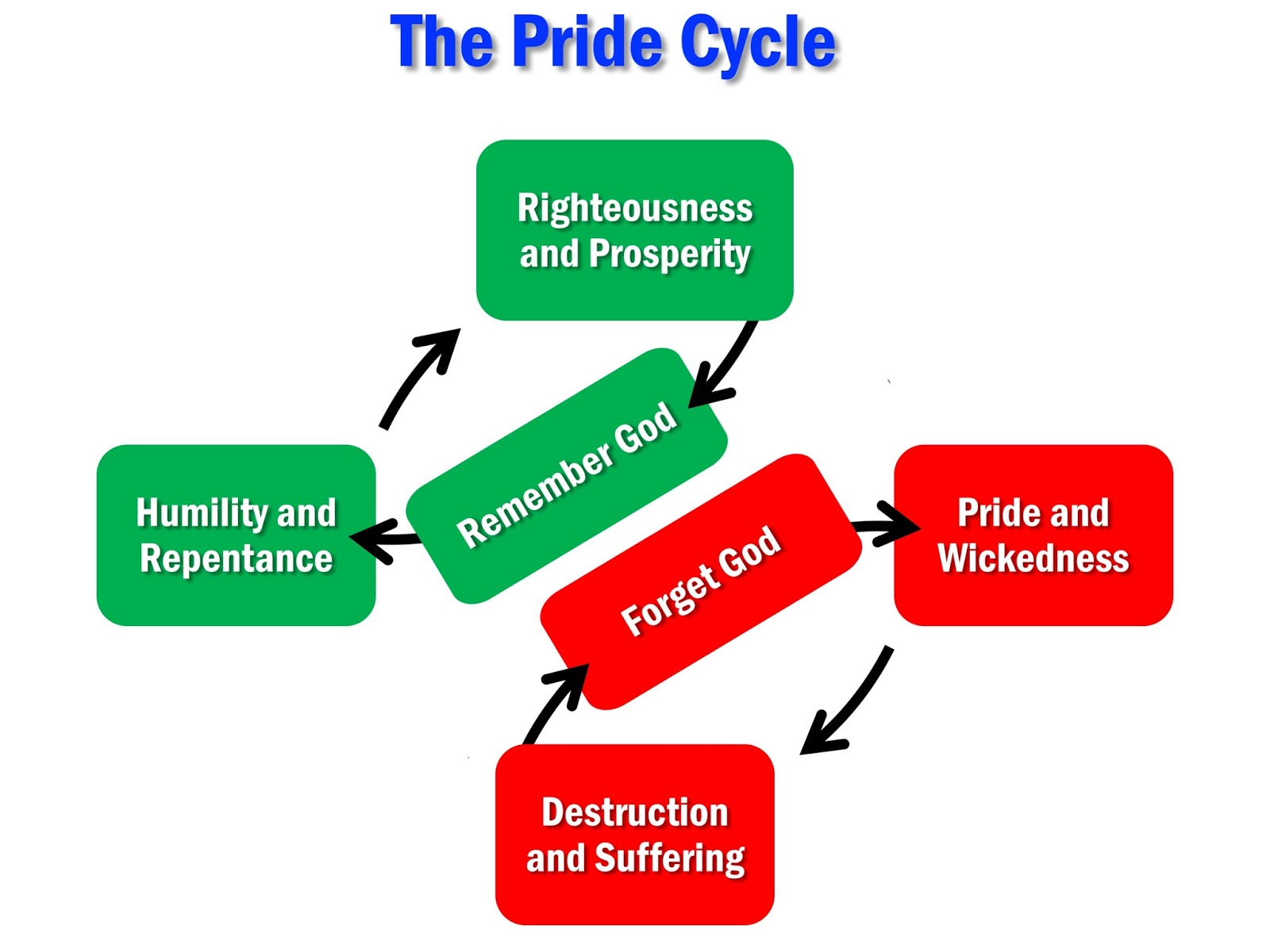
The Book of Mormon shows over and over how the pride cycle led to the destruction of people and even entire civilizations.  But I can experience that cycle within myself.  The cycle shows how righteous and prosperity can lead to pride and wickedness.  


How do I break that cycle?  If I can remember God and stay humble and repentant, then I can avoid pride and wickedness.  


But how do I remember God?  Here are a few ideas.


The Primary answers of praying and studying the scriptures are great ways to focus on God.  Reading about the Lord in the scriptures helps me to know Him better.  Praying helps me to draw nearer to him.  Both help us to “put on the whole armor” on a daily basis.


Practice gratitude—recognize God’s hand in my life.  For a perfectionist, gratitude doesn’t come easily.  It’s hard to be grateful when I feel flawed, inadequate, broken, and “not enough.”  But just as I can practice other positive habits, I can practice gratitude.  Each day, as part of my morning “mindfulness,” I write down three new things for which I’m thankful.


Serving others also helps me to better know Him.  “For how knoweth a man the master whom he has not served?” (Mosiah 5:13).  “When ye are in the service of your fellow beings ye are only in the service of your God” (Mosiah 2:17).


It should be obvious, but if I don’t remember the Lord, then I am in danger of forgetting Him—and heading down the destructive path of the Pride Cycle  “Then beware lest thou forget the Lord” (Deut. 6:12).  How do you remind yourself to stay focused on God throughout the day?  
To be continued . . . with Part 24

Confessions of a Recovering Perfectionist – Part 22

This is going to be another post about shame.  If you wonder why I keep harping on this subject, I just want you to know that understanding shame and what it does to me and how to become shame resilient has been some of the most significant findings of my life.

It has now been more than two years since I started “shame therapy.”  I didn’t call it that when I started.  In fact, I didn’t claim shame for most of my life.  While growing up, I don’t remember a lot of times when people said to me, “Shame on you!” or “You ought to be ashamed of yourself!”  The shame was most often unintentional, implied, or even unspoken.  But the perceived expectations were there, nonetheless.  And they certainly took their toll.


My therapist never called it shame therapy, but we have been using Brené Brown’s shame curriculum in my sessions with him.  The curriculum includes a set of worksheet, video clips, and other assignments geared toward helping me accurately recognize shame and its effects in myself, and then giving me the skills and knowledge to become shame resilient.  Identifying shame triggers, knowing how shame manifests itself in me physiologically, and practicing how to react productively have been invaluable in my recovery.

Brené Brown teaches that shame is the birthplace of perfectionism.  Much as I resisted that reality for a long time, it’s true.  Anyone who is experiencing perfectionistic tendencies, low self-worth, faulty core beliefs, or chronic feelings of inadequacy is dealing with shame, whether we acknowledge it or not.  


From time to time I’ve wondered how this shame work aligns with the gospel.  When I give Brené Brown such credit for helping me, instead of giving that glory to the Lord, am I trusting in “the arm of flesh” instead of “relying alone on the merits of Christ”?  (Moroni 6:4.)  Am I promoting “the philosophies of men” more than the teachings of Christ?  

It may seem that way.  But I’m increasingly becoming aware of the hand of God in other mortal servants.  Pres. Kimball said that “God does notice us, and he watches over us. But it is usually through another person that he meets our needs.”  (Ensign, Dec. 1974.)  Pres. Benson said that if we turn to God, He will “raise up friends” to help us.  (Ensign, Dec. 1988.)  I would definitely include Brené and also my therapist in that group of friends, along with others in my “support” network.  

I also believe, as Saint Brené says, “The more we talk about shame, the less we have it.  And the less we talk about shame, the more we have it.”  So this blog is part of my recovery.  There is much research establishing the therapeutic benefits of journaling.  As much as it is uncomfortable for me to be this vulnerable, the growth I receive is definitely worth the discomfort.  
To be continued . . . with Part 23.

Confessions of a Recovering Perfectionist – Part 21

I serve on the high council in my stake.  So most months I speak in one of the twelve wards in Sacrament Meeting.  This year my main topic has been the idea of focusing outward instead of inward.  

The primary concept is from a talk Elder Bednar gave at BYU-Idaho called “The Character of Christ.”  He taught that “Throughout His mortal ministry . . . the Savior of the world turned outward—when the natural man or woman in any of us would have been self-centered and focused inward.”  My initial thought when I heard the talk was that if I want to be like Christ, I must focus on others instead of myself.  Shouldn’t that be my quest?  If I could lose myself in the service of others, then I’d be very Christlike.
One of the problems with this kind of thinking is that it’s very black-or-white.  Can I really spend all of my time focusing on others, and not myself?  Is it possible or good to always focus outward?  Are there times when we could appropriately focus inward?  I believe there are.  
If you’ve flown on on airplane you’ll remember one of the instructions you were given:  “In the event of a loss of cabin pressure, oxygen masks will drop from the overhead area. Please place the mask over your own mouth and nose before assisting others.”
This is an interesting principle.  In the event of an emergency, if I’m going to be able to help the child beside me secure his oxygen mask, I need to first secure my own.  If I am going to be able to help my neighbours, I first need to put on my own oxygen mask.  What might appear to be a self-serving act is actually the condition for being able to care for others.
You’ve probably also heard concepts like these:
You can’t pour from an empty cup.  Take care of yourself first.  You cannot serve from an empty vessel.  When you take time to replenish your spirit, it allows you to serve others from the overflow.  

Self-compassion should be an important aspect of the compassion we show.

Another way to look at self-care is “recharging your battery” so that you can operate optimally.
Stephen R. Covey refers “sharpening the saw.”  You can’t cut down a tree very well if your saw is dull.

I believe that there are times when I can appropriately focus inward.  
Let’s look at a few examples from the scriptures:
Before he began his ministry, the Savior spend time in the wilderness fasting for 40 days.  This was an important part of his preparation to go forth.  (Matt 4:1-2.)
Christ told Peter that he should first concentrate on his own conversion, and then he should strengthen his brethren.  (Luke 22:32.)
Enos went to hunt beasts in the forest, his soul hungered, and he cried unto God in mighty prayer.  His sins were forgiven him because of his faith in Christ.  Once he had received his own conversion, he then prayed for the welfare of his brethren—both the Nephites and the Lamanites.  He moved from an inward focus to an outward focus.  (Enos 1:1-11.)
Because we live in a fallen world, it’s not possible to always have an outward focus.  But my focus is an indication of my level of conversion.  As I become more like Christ, and develop a character more like His, my tendency will be to focus less on myself and more on others.  As I receive the mighty change of heart, my concerns will be more outward than inward.  

To be continued . . . with Part 22.

Confessions of a Recovering Perfectionist – Part 20

Twice each year as I watch General Conference, I specifically listen for teachings that support me in my efforts to deal effectively with my perfectionistic tendencies.  
The quintessential talk this time was Am I Good Enough? Will I Make It? by Elder J. Devn Cornish of the Seventy, in the Saturday Morning Session.  Here are the parts that stood out to me.
Our members often ask, “Am I good enough as a person?” or “Will I really make it to the celestial kingdom?” Of course, there is no such thing as “being good enough.” None of us could ever “earn” or “deserve” our salvation, but it is normal to wonder if we are acceptable before the Lord, which is how I understand these questions.
Sometimes when we attend church, we become discouraged even by sincere invitations to improve ourselves. We think silently, “I can’t do all these things” or “I will never be as good as all these people.”
Let me be direct and clear. The answers to the questions “Am I good enough?” and “Will I make it?” are “Yes! You are going to be good enough” and “Yes, you are going to make it as long as you keep repenting and do not rationalize or rebel.” The God of heaven is not a heartless referee looking for any excuse to throw us out of the game. He is our perfectly loving Father, who yearns more than anything else to have all of His children come back home and live with Him as families forever. He truly gave His Only Begotten Son that we might not perish but have everlasting life! Please believe, and please take hope and comfort from, this eternal truth. Our Heavenly Father intends for us to make it! That is His work and His glory.
I sometimes think we don’t recognize how very much the Lord wants to help us. I love the words of Elder David A. Bednar, who said:
“Most of us clearly understand that the Atonement is for sinners. I am not so sure, however, that we know and understand that the Atonement is also for saints. The Atonement provides help for us to overcome and avoid bad and to do and become good. It is through the grace of the Lord that individuals receive strength and assistance to do good works that they otherwise would not be able to do. This grace is an enabling power or heavenly help each of us desperately needs to qualify for the celestial kingdom.”
All we have to do to receive this heavenly help is to ask for it and then to act on the righteous promptings we receive.
As an intensive care pediatrician, I know that if one inappropriately rejects lifesaving treatment, it can lead needlessly to physical death. Similarly, when we rebel against God, we reject our only help and hope, who is Jesus Christ, which leads to spiritual death. None of us can do this on our own power. None of us will ever be “good enough,” save through the merits and mercy of Jesus Christ, but because God respects our agency, we also cannot be saved without our trying. That is how the balance between grace and works works. We can have hope in Christ because He wants to help and change us. In fact, He is already helping you. Just pause and reflect and recognize His help in your life.
I witness to you that if you will really try and will not rationalize or rebel—repenting often and pleading for the grace, or help, of Christ—you positively are going to be “good enough,” that is, acceptable before the Lord; you are going to make it to the celestial kingdom, being perfect in Christ; and you are going to receive the blessings and glory and joy that God desires for each of His precious children—including specifically you and me.
These teachings are “perfect” for those of us trying to be perfect.  They give me hope that I can make it.  The more I hear these kinds of affirming truths, the better able I am to combat the “gremlins” that whisper to me faulty ideas that damage my self-worth.  As Elder Cornish spoke, I felt the Lord’s love for me, and His Spirit whispered to me that “it’s true.”  This is why I love Conference so much!
To be continued . . . with Part 21.

Confessions of a Recovering Perfectionist – Part 19

Doing Things for the Right Reasons
The perfectionist approach to doing things is very much a checklist mentality: I’ve gotta keep all the rules and commandments so I can feel good about myself and receive the blessings.’  If I pay tithing, the Lord will pour out blessings upon me (Malachi 3:10).  When I receive any blessing from God, it is because of obedience to a law, right (D&C 130:20)?  So does it matter why I obey?  If I’m just checking things off my list, will I still be as blessed as I would if I had proper motives?  It’s a good question.


It extends to how I treat others.  The Gospel is all about loving and caring and giving and serving my fellowmen.  And supposedly I’ll be blessed for doing so.  But does my motivation for serving others matter?  Moroni tells me that if I give a gift grudgingly, it’s as if I hadn’t given it and it is counted as evil (Moroni 7:8).  Paul teaches that if I don’t have charity, then I could give away all my goods to feed the poor, and it would profit me nothing (1 Corinthians 13:3).   


So it’s not enough just to do good; I have to do it for the right reasons.  If my heart isn’t in the right place, I won’t receive the blessing.  


But here in this fallen world, my heart isn’t always in the right place.  I don’t always want to do the right things.  
Focusing Outward or Inward?
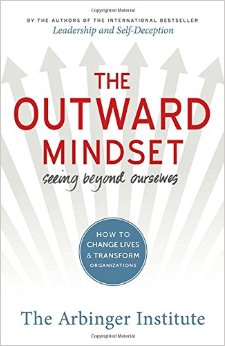
This summer I read a book called “The Outward Mindset.”  It’s by the Arbinger Institute, the same group that created “Leadership and Self-Deception” and “The Anatomy of Peace.”  The main premise of the book is that we can improve our relationships with others as we change our mindset to see others not as objects, but as real people.  Rather than focusing on changing my behavior with others, if I change my mindset towards them, then my behaviors will also change in congruent ways.  


This aligns with what Elder Dale G. Renlund taught in his first General Conference talk:  

To effectively serve others we must see them through Heavenly Father’s eyes. Only then can we begin to comprehend the true worth of a soul. Only then can we sense the love that Heavenly Father has for all of His children. Only then can we sense the Savior’s caring concern for them. We cannot completely fulfill our covenant obligation to mourn with those who mourn and comfort those who stand in need of comfort unless we see them through God’s eyes. This expanded perspective will open our hearts to the disappointments, fears, and heartaches of others. We need to have eyes that see, ears that hear, and hearts that know and feel. Only when we see through Heavenly Father’s eyes can we be filled with “the pure love of Christ.”


When I truly see others through Heaven’s eyes, I will serve them for the right reasons.  


In 2003 Elder David A. Bednar gave a talk at BYU-Idaho called “The Character of Christ.”  He said that Christ’s character is that He “turned outward, when the natural man or woman in any of us would have been self-centered and focused inward.”  So the more I become like Christ and take His character upon me, the more I will focus on others.  The more I develop a heart like His, the more love and concern I will show for others, and the less self-absorbed I will be.  


The Arbinger Institute is right, when I have an outward mindset, my relationships with others will improve and I will serve them with a sense of genuineness, rather than out of duty.  My desires will be pure.  My heart will be in it.

To be continued . . . with Part 20.

Confessions of a Recovering Perfectionist – Part 18

Neuroplasticity is the ability of the brain to rewire itself based on our thoughts and the choices we make.  “Neuro” = brains.  “Plastic” = changeable.  


In years past, it was believed that the brain grew from childhood as we learned new things, but that eventually as adults, the brain stopped growing, and we couldn’t do much to change that.  Hence, the saying, “You can’t teach an old dog new tricks.”  However, now we know that the brain is continually changing and rewiring everyday, according to what we think and do.  We are always creating and strengthening neural pathways.  Whenever I spend time thinking about new things or working on a new skill, I get better at it.  If I practice the piano daily, that ability will improve.  If I take the time to exercise, not only will my body get healthier, but so will my mind.  If I spend time worrying, those neural pathways will be reinforced and I’ll get really good at worrying.


Here’s a personal example:  When I drive to work everyday, I typically take the same route.  I’ve done it enough times, that I can now drive there almost without thinking.  If I drive out of my driveway and then go on autopilot, I’ll eventually wind up in the parking lot at work.  I’ve strengthened the “drive to work” neural pathway in my brain so that it takes precedence over other pathways.  If I want to go to the grocery store instead, I have to consciously keep that destination in mind.  Otherwise I’ll end up in the parking lot at work.


But recently, the city of Rexburg has been putting in a new storm drain line, so they’re tearing up the road on a main route I’ve taken for years.  Now there are detour signs to guide drivers on other ways to get through town.  So I’ve been taking a new route for about the past five weeks.  


Initially, it was a bit surprising when I’d get to the “road closed” sign, and every day and I’d grumble about having to change my routine.  But now I’ve noticed that the detour route is becoming the new autopilot.  And it’s becoming comfortable.  (At least I’ve stopped grumbling about it.)


Here’s another example:  For the past few years I’ve used the same password when I login to my account at BYU-Idaho.  We are encouraged to change our passwords regularly, so I recently did.  But my fingers still want to follow the pattern of the old password.  It has taken me a few weeks to develop the new habit.  And even now, if I’m on autopilot, I’ll put in the old one and get the error message.  


So it’s just like developing any new habit—it takes a little time for the brain to rewire itself to the new pattern.  


Switch on Your Brain
I recently bought and began reading “Switch on Your Brain” by Dr. Caroline Leaf, a communication pathologist and audiologist who has worked in the area of cognitive neuroscience for many years.  Supported by current scientific and medical research, Dr. Leaf explains how by changing my thinking patterns, I can achieve better health and wholeness. I’m impressed with the lengths she goes to in order to back up her ideas.  It’s also biblically based, so she brings in scripture to add credence to her claims:  


Chapter 1 Summary
  1. The debate in science is centered on the question of: 1) is the mind defined by what the brain does, or 2) does the brain do the bidding of the mind?
  2. The correct view is that the mind is designed to control the body, of which the brain is a part, not the other way around.
  3. Our brain does not control us; we control our brain through our thinking and choosing.
  4. We can control our reactions to anything.
  5. Choices are real. You are free to make choices about how you focus your attention, and this affects how the chemicals, proteins, and wiring of your brain change and function.
  6. Research shows that DNA actually changes shape in response to our thoughts.
  7. Stress stage one is normal. Stress stages two and three, on the other hand, are our mind and body’s response to toxic thinking­—basically, normal stress gone wrong.
  8. Reaction is the key word here. You cannot control the events or circumstances of your life, but you can control your reactions.


This has great implications for those of us who have spent years repeating old mental scripts or statements:  I’m not good enough.  I’ll never get it right.  I’m not valuable.  I’m not worthy of love.  Because my brain is malleable, I can change the way I talk to myself, and rewire the pathways I take.  


Thoughts Lead to Changes
My Mom often quoted to me the following statement, which is sometimes attributed to Ralph Waldo Emerson: “That which we persist in doing becomes easier for us to do—not that the nature of the thing is changed, but that our power to do is increased.”  Another of Emerson’s statements supports this concept: “Sow a thought and you reap an action; sow an act and you reap a habit; sow a habit and you reap a character; sow a character and you reap a destiny.”


I also believe that the Spirit can work on our minds and quicken the changes in our brains.  “To be carnally-minded is death, and to be spiritually-minded is life eternal.”  The Guide to the Scriptures says that repentance is “A change of mind and heart that brings a fresh attitude toward God, oneself, and life in general.”  Isn’t it probable that positive changes in my brain can accompany or lead to a mighty change of heart?  
To be continued . . . with Part 19.

Confessions of a Recovering Perfectionist – Part 17

The initial development of my perfectionism resulted from some childhood experiences.  (See Of Wounds and Walls in Part 5.)  Let me share one particular incident I’ll call “Too Little.”  


As I remember it, I was four or five years old.  My dad was the scoutmaster for our troop and they were getting ready to go on an overnighter and a hike.  Dad was taking my two older brothers on the trip, even though they weren’t yet scout age.  As they were about to leave I begged to go with them, but I was “too little.”  As they drove the pickup away I chased after them shouting, “take me with you.”  After several blocks, they were out of sight.  I turned back and walked slowly home, where I sat on the porch steps and cried.  Initially I felt mostly sadness, but later my attitude became, “It’s not fair!”  


I had nearly forgotten this experience and didn’t really consider it to be a big issue.  After all, I was too little.  (Can you imagine hiking with a whole troop of about 25 scouts, plus three young boys?)  But recently I learned that this experience contributed to some childhood trauma.  And recalling it from an emotional (as opposed to an intellectual) space allowed me to step into that trauma and process it in productive and healing ways.  

I had other similar experiences as a child, none of them really largeI wasn’t beaten or abused, my parents didn’t divorce, they weren’t alcoholics or druggies, we didn’t move a lot, we weren’t living in poverty, I wasnt told I was stupid or ugly.  (I did experience the death of a younger brother who was born premature and lived for just a few hours, and I was only two years old at the time so I don’t remember a lot. But I suspect that there may be some early issues around that.)  


Resolving the Trauma
In her article Resolving the Trauma You Didn’t Know You Had Lisa Firestone, Ph.D. refers to trauma with a “little t.”  The following is taken directly from her Psychology Today article (which I highly recommend):   


Most of us wouldn’t use the word trauma when telling our story. We may associate trauma with natural disaster, disease, war, loss or other extreme acts of violence. Unless we’ve suffered sexual or physical abuse, or even if we have, we may tell ourselves that there was no “trauma” in our early life. Yet, a trauma can be defined as any significant negative event or incident that shaped us. It can emerge from any impactful instance that made us feel bad, scared, hurt or ashamed. By this definition, we have all experienced some degree of trauma in the process of growing up. And how well we cope in our lives today depends, to a large extent, on how much we are willing to recognize and make sense of this trauma.


No matter how often we try to tell ourselves that the past is in the past or to write off the ways we were hurt as “no big deal,” our history continues to affect us in countless, unconscious ways. Research shows that when we fail to face and process the large and small traumas of our past, we can become stuck in our pain. We may struggle in our relationships and recreate our past in our present. In order to identify the events that hurt us, we must realize that trauma can exist in many forms. Psychologists often refer to traumatic interpersonal events that were not life-threatening but generated a significant emotional response as “little t” trauma. These can include instances of bullying, rejection, neglect, ridicule, verbal abuse, alarm, etc.


Our list of traumatic memories may or may not be long. We may struggle to even think of anything at first. It’s common to discount what happened to us as kids as not that important once we’re adults. Yet, what we have to remember is that it’s not about how we feel about the event now but how we felt as kids that affects us. Many things feel a lot bigger and scarier to a child who has little control or power over their circumstances.


When I recall the “Too Little” incident and other experiences, I can see how they impacted my self-worth.  I experienced some feelings of rejection, abandonment, and being unlovable.  These feelings resulted in a desire to be self-reliant, so I wouldn’t need to ask anyone else for anything, and risk being rejected.  


Children often bury negative memories that are painful to acknowledge.  I wasn’t abused or neglected by my family.  My dad did exactly what he should have done in this case.  But I still felt hurt.  


It’s Not Fair!
My mom has said that I grew up with an extreme sense of justice.  When I perceived that I wasn’t being treated fairly, I could rationalize pretty much any reaction—usually anger.  It has taken me many years to really recognize this tendency in myself.  I love what Elder Dale G. Renlund taught about fairness in this past General Conference:  


The concept—“the greater the distance between the giver and the receiver, the more the receiver develops a sense of entitlement”—also has profound spiritual applications. Our Heavenly Father and His Son, Jesus Christ, are the ultimate Givers. The more we distance ourselves from Them, the more entitled we feel. We begin to think that we deserve grace and are owed blessings. We are more prone to look around, identify inequities, and feel aggrieved—even offended—by the unfairness we perceive. While the unfairness can range from trivial to gut-wrenching, when we are distant from God, even small inequities loom large. We feel that God has an obligation to fix things—and fix them right now!


The sacrament truly helps us know our Savior. It also reminds us of His innocent suffering. If life were truly fair, you and I would never be resurrected; you and I would never be able to stand clean before God. In this respect, I am grateful that life is not fair.

At the same time, I can emphatically state that because of the Atonement of Jesus Christ, ultimately, in the eternal scheme of things, there will be no unfairness. “All that is unfair about life can be made right.”

I know that Jesus is aware of me, that he understands my hurt and my anguish. He knows my griefs and my sorrows. He is come to heal the broken-hearted and those who experience trauma and injustice.


To be continued . . . with Part 18.

Confessions of a Recovering Perfectionist – Part 16

Self-Compassion
Self-compassion is extending compassion to one’s self in instances of perceived inadequacy, failure, or general suffering.  


We are taught in the scriptures that we should lose our lives in the service of others, and then we will find ourselves (Matt 10:39).  In other words, to feel good about myself, I need to be focused outward on my fellowmen.  This concept has caused many a perfectionist to feel guilty if we spend time on ourselves.  So it has taken me a while to feel OK about self-compassion.  


A related scripture tells me to love my neighbor as myself (Matt 22:39).  This isn’t really difficult if I have a bad self-image—since I don’t love myself much, I don’t need to love others much either.  But I still need to serve my fellowmen in order to serve God.  


The Lord told Peter: “when thou art converted, strengthen thy brethren” (Luke 22:32).  He didn’t just tell him to strengthen his brethren; he told him to first work on his own personal condition.  


Dr. Kristin Neff, one of the foremost researchers on self-compassion, has defined self-compassion as being composed of three main components—self-kindness, common humanity, and mindfulness.  She further teaches:


Having compassion for oneself is really no different than having compassion for others. Think about what the experience of compassion feels like. First, to have compassion for others you must notice that they are suffering. If you ignore that homeless person on the street, you can’t feel compassion for how difficult his or her experience is. Second, compassion involves feeling moved by others’ suffering so that your heart responds to their pain (the word compassion literally means to “suffer with”). When this occurs, you feel warmth, caring, and the desire to help the suffering person in some way. Having compassion also means that you offer understanding and kindness to others when they fail or make mistakes, rather than judging them harshly. Finally, when you feel compassion for another (rather than mere pity), it means that you realize that suffering, failure, and imperfection is part of the shared human experience.


Self-compassion involves acting the same way towards yourself when you are having a difficult time, fail, or notice something you don’t like about yourself. Instead of just ignoring your pain with a “stiff upper lip” mentality, you stop to tell yourself “this is really difficult right now,” how can I comfort and care for myself in this moment?


Instead of mercilessly judging and criticizing yourself for various inadequacies or shortcomings, self-compassion means you are kind and understanding when confronted with personal failings.


You may try to change in ways that allow you to be more healthy and happy, but this is done because you care about yourself, not because you are worthless or unacceptable as you are. Perhaps most importantly, having compassion for yourself means that you honor and accept your humanness. Things will not always go the way you want them to. You will encounter frustrations, losses will occur, you will make mistakes, bump up against your limitations, fall short of your ideals. This is the human condition, a reality shared by all of us. The more you open your heart to this reality instead of constantly fighting against it, the more you will be able to feel compassion for yourself and all your fellow humans in the experience of life.


At BYU-Idaho, where I work, we have weekly devotional assemblies.  Sometimes the speakers are general authorities or other well-known LDS individuals.  Other times, they are our peer employees at the university.  Earlier this month the speaker was Gwenaelle Couliard, who works in the BYUI Counseling Center.  (Gwena and I were in the same student ward at BYU many years ago.)  Her talk was was excellent and a few concepts stood out to me because of my perfectionism.  Let me share two paragraphs:


The Lord understands us. He experienced the dual nature himself although His beautiful divine spirit prevailed. However, through manipulative maneuvers, Satan attacked the Lord with temptations of the flesh and the mind, when Jesus was hungry and tired. Although it is hard to know exactly how much He suffered from those evil acts of aggression toward Him, the scripture testifies that He endured them throughout His ministry. Not long before His death, He said the following to His apostles: “Ye are they which have continued with me in my temptations.” And Paul confirmed that He “…was in all points tempted like as we are, yet without sin.” Jesus has perfect empathy for us, having the bowels of mercy; being filled with compassion toward the children of men.


So the Lord spent time working on himself before he began his formal ministry.  He first allowed self-compassion for himself, so he could then appropriately focus on us.  [Actually, I don’t think this is black-and-white / either-or; I think we can exercise compassion for ourselves while serving others compassionately.]
 
Gwena continues:  If the Lord has compassion for us, whom He died for, sacrificing all because of His love for us, shouldn’t we have compassion toward ourselves for being human? If your young child who fears doctors, bursts into tears at the sight of the needle when getting his immunization shots, you and the nurse don’t yell at him or call him names, do you? No! As a parent, you provide reassurance and seek to know what you can do to alleviate your child’s anxiety while the nurse adds clear instructions and follows protocol. Likewise, we have been given a clear way to bring us back from breaking God’s law. That pathway is repentance. But let’s not neglect the need for understanding and kindness toward ourselves. I encourage you to exert patience and compassion for yourselves when facing your imperfections. … Be kind with yourself, seek to understand, without judging, what the trouble is. Repent if you need to, and then, strive to do better.  


I’m finally liking the idea that I can take time for myself without feeling selfish, while also continuing to appropriately focus on serving others.  There’s a happy medium incorporating both.  I’m hoping to find and feel good about it.  


To be continued . . . with Part 17.

Confessions of a Recovering Perfectionist – Part 15

Let’s talk about the need to be “in control.”


Regarding addictions, I’ve never been drawn to things like drugs or alcohol or pornography.  But if I do have an addiction, it’s needing to be in control.  I think that’s where I get my “fix.”  And because it’s not so unacceptable as other addictions, I could indulge and not feel like I was disobeying the commandments.  For a perfectionist, that’s very significant!  Besides, I only recently came to the realization that it was addictive and obsessive.  


I was reading in Alma 30 and came across verse 17.  Here, Alma is describing Korihor, the anti-Christ, and explains how he preached about “the management of the creature.”  It was pretty descriptive of my mentality:  If I can just manage things well and be extremely organized, then maybe I can do a better job at keeping the commandments and avoiding sin.  


That’s an interesting mindset, and I can see why it appealed to me.  But it’s not sustainable.  I live in a fallen world.  I’m a natural man and I make mistakes.  And trying to “manage” things completely means relying on the arm of flesh to make it through.  


That’s the real problem with this kind of thinking, and why it’s anti-Christ.  It denies the atonement.  It attempts to survive on “my own merits.”  It’s trying to show how good I can be without needing the Savior.  And the scriptures are replete with the teaching that “there is no other way or means whereby man can be saved, only in and through Christ” (Alma 38:9).  The more I try to save myself, the further I get from Him and His deliverance.


Another aspect of control is that I can easily become overly concerned about things outside of my control.  In his “7 Habits of Highly Effective People,” Stephen R Covey teaches about the Circle of Control and the Circle of Concern.  Everything I spend time thinking about is my Circle of Concern.  Everything I can actually influence is my Circle of Control.  


Basically, my existence will be much better if I focus my mental and physical energy only on the things I can personally influence.  Everything else is a distraction that pulls me away from running my life properly.  But ultimately, this smaller focus increases my ability to do good and to lead a more productive life.  

So letting go of the need to control is part of my recovery.  And I believe it’s working, little by little.  


To be continued . . . with Part 16.