
Turning 70 Without Turning on Myself

I turned 70 this month. I won’t pretend that number didn’t give me pause. Birthdays like this tend to invite thoughts of years lived, mistakes made, blessings received, and questions still unanswered.
One thing has become clearer to me. If I want these later years to be peaceful and meaningful, I have to be careful not to turn my old perfectionism inward and let it rob me of joy. I don’t want to spend my time sitting in a rocking chair on the front porch, watching cars drive up and down the road, and yelling at the neighbor kids to stay off the lawn.
For many of us in the Church, perfectionism doesn’t always look harsh or self-centered. Sometimes it comes out more subtly. It sounds like: I should be stronger than this by now. I should have more faith. I shouldn’t still be struggling with my body, my energy, or my emotions.
We know the scripture about becoming “perfect in Christ,” but somewhere along the way, some of us learned to interpret that as being hard on ourselves until we finally get it right.
Aging has a way of revealing how unkind that approach really is. Our bodies slow down. Energy comes and goes. Old regrets sometimes resurface. And if we’re not careful, we start treating these natural parts of aging as personal failures rather than normal parts of mortality.
One of the most freeing realizations I’ve had is this: aging is not a performance review. It’s not a test to see whether we exercised enough, served enough, or overcame everything we thought we should have overcome by now. Mortality doesn’t work that way. The gospel teaches us that growth is lifelong. And also, that weakness is not evidence that I’m a disappointment to God. “I give unto men weakness,” the Lord says, not as punishment, but as an invitation to humility and grace.

When we’re younger, much of life is about building careers, families, testimonies, and callings. Later life invites a different kind of discipleship. Less proving. More receiving. Receiving help. Receiving rest. Receiving the fact that slowing down doesn’t mean we’re sliding backward spiritually. I’ve noticed that people who seem to age with the most peace are not those who cling tightly to who they used to be, but those who allow themselves to become who they are now, without shame.
One of the quiet tasks of aging is learning to put down the internal checklist. The one that keeps track of 1) what I should still be able to do, 2) what others my age seem to be doing better, and 3) what I wish I had done differently.
For my birthday, my wife gave me a mug. On the outside, it says “Man of wisdom.” I hope that’s who I’m becoming.
As I step into this new decade, my goal is not to age flawlessly or even impressively. My goal is to age faithfully. To trust that the Lord is far more interested in my heart than in my productivity.
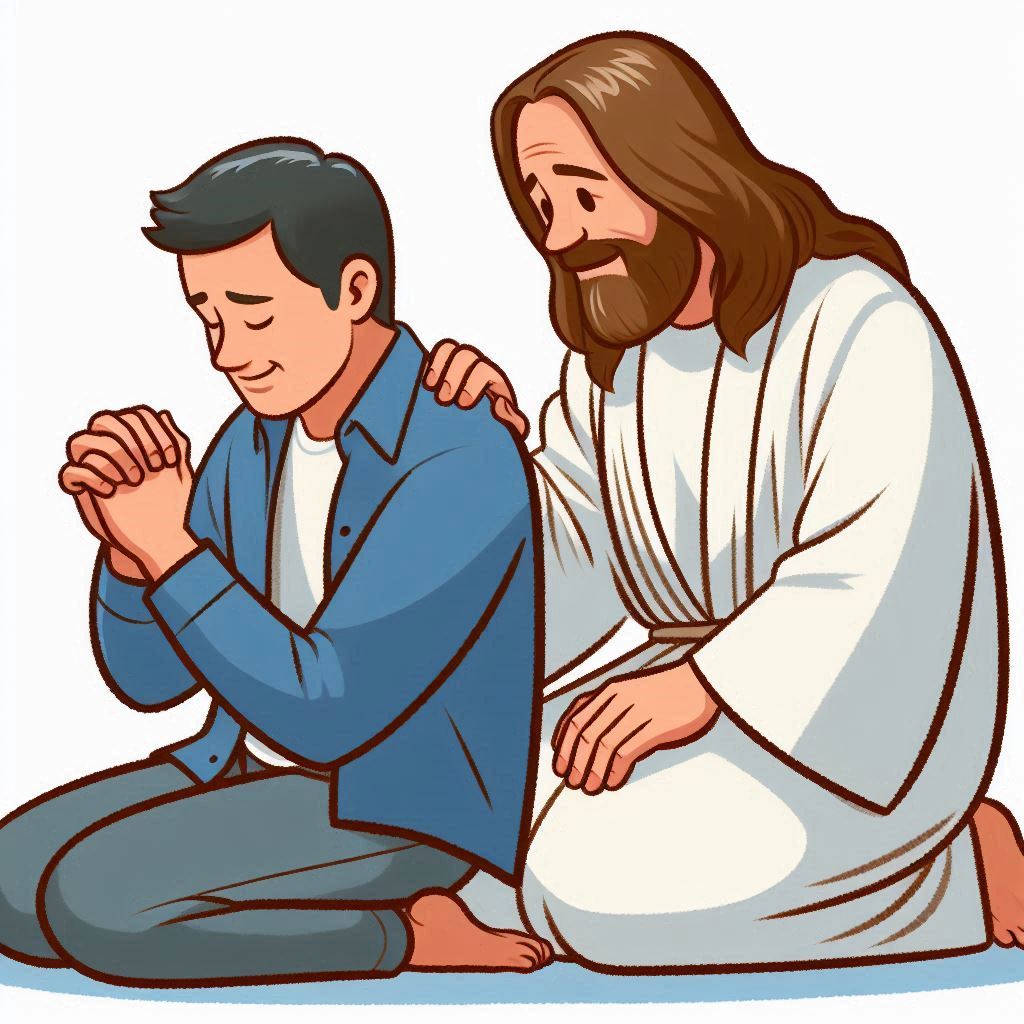
If perfectionism once pushed me forward, I no longer want it driving the rest of the journey. There is a quieter strength available now, one rooted in humility, compassion, and trust in Christ.







 Imperfect Guy