Confessions of a Recovering Perfectionist – Part 128

It seems many of us, as parents, want the best for our children. We want them to succeed in school, in activities, in callings, in life. We want them to become the people Heavenly Father created them to be. But sometimes, in our zeal to help them succeed—or in our own need for validation—we may unintentionally sow the seeds of something dangerous: toxic perfectionism.

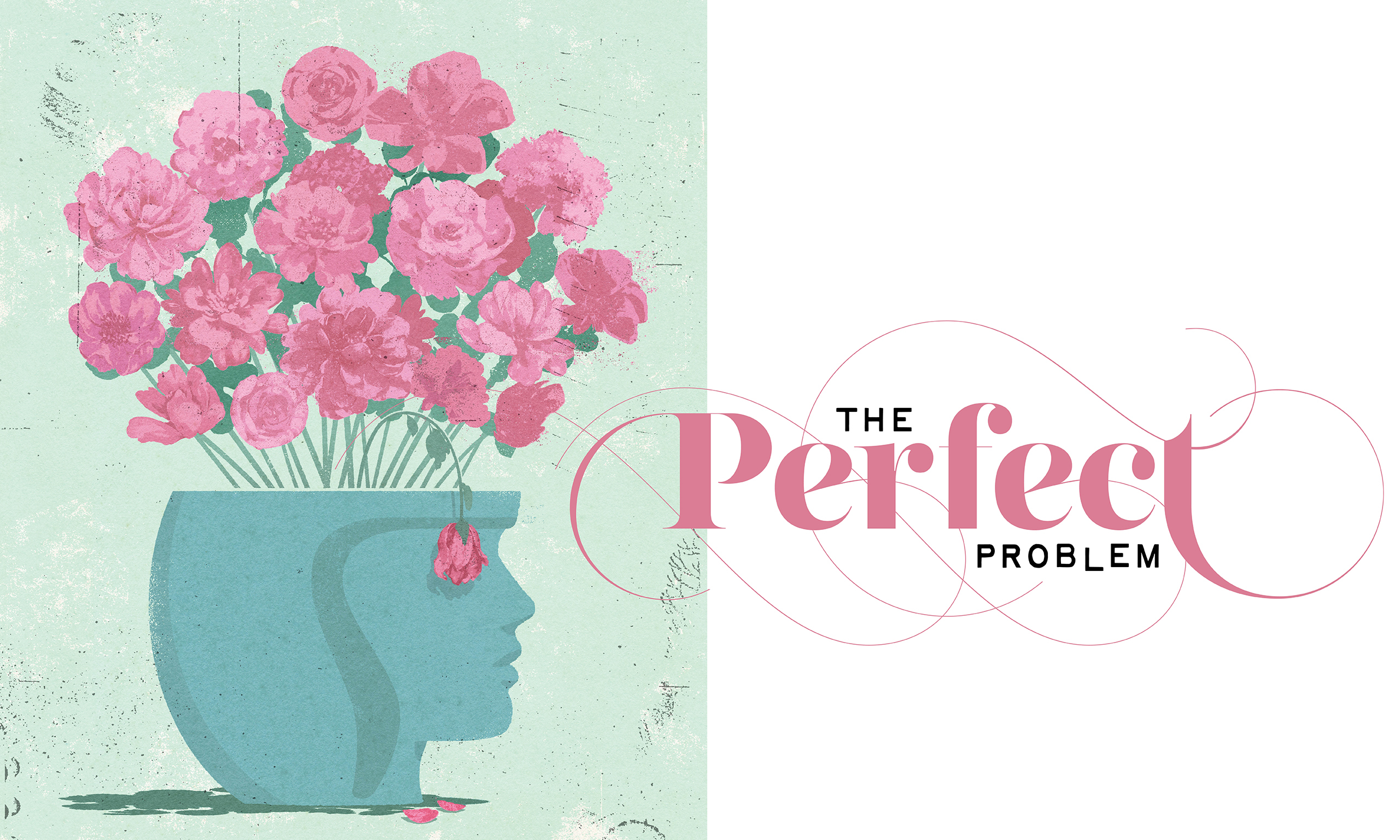
As was recently described in a Y Magazine article entitled “The Perfect Problem,” parents who hold high, inflexible expectations and who respond to unmet standards with criticism or disappointment—and sometimes even withdraw love, affection, or emotional closeness—can contribute to a mindset in their children that equates worth with flawless performance. 

Children are perceptive. As one researcher quoted in that article put it, they are “very sensitive to any parental fear. A sense that Mom’s afraid I’m not enough … I’m insufficient—children are going to be sensitive to that, because their safety as a person depends on the security of that relationship.” 

When that becomes the “soil” in which a child’s identity grows, mistakes and developmental missteps can start to feel existential—not just as “I messed up this time,” but “I’m not good enough,” “I don’t belong,” or even, “God can’t love me if I’m not perfect.” 

In the context of a family, this is especially poignant. Our faith teaches us to “be ye therefore perfect” (Matt. 5:48). Yet we also know, through the gospel of Jesus Christ, that perfection is ultimately a gift of grace, not the result of flawless performance. 

Thus, without healthy grounding in grace and identity in Christ, a home that unintentionally elevates performance—grades, callings well done, “righteous living,” temple attendance, activity in the Church—can become a breeding ground for perfectionism that undermines spiritual and emotional well-being.

It’s not just anecdotal or spiritual concern; psychological research confirms that children often pick up perfectionistic tendencies from their parents and their parenting style.

In a study of 119 children (average age about 11.7) and their parents, researchers found that children’s levels of perfectionism often mirrored their parents’. This supports what is called the “Social Learning Model.” 

The same study showed that parenting style matters: when children perceived their parents as authoritarian—rigid rules, high expectations, controlling or overly critical—they were more likely to develop maladaptive/perfectionistic patterns (worry, harsh self-criticism, fear of failure) rather than the healthy striving toward excellence that might be positive. 

Additional research suggests that more positive parenting—warmth, responsiveness, acceptance—is associated with healthier child adjustment. In fact, parents with “positive perfectionism” (high standards + healthy attitudes) tend to report more acceptance in their child-rearing. In contrast “negative perfectionism” (self-criticism, fear of failure) correlates with more criticism or permissiveness in parenting. 

In other words: it’s not just what you expect, it’s how you expect it, how you respond when expectations are unmet, and whether love, acceptance, and identity are tied to performance.

As people of faith, we have a unique vantage. On the one hand, we believe in personal growth, striving to become more like the Savior, improving ourselves spiritually, mentally, physically, and in service. Those are good and worthy goals. On the other hand, our doctrine teaches humility, reliance on the Atonement, grace, mercy, and repentance—recognizing our mortal weaknesses and the need for divine help.

Thus, when parenting, the gospel invites us not only to encourage growth but also to foster a secure identity rooted in God’s love, not in performance metrics.

When our children learn that their worth is unchanging because they are beloved sons or daughters of Heavenly Parents, and that growth is a process, not a demand for perfection, we help inoculate them against the toxic perfectionism described in both the Y Magazine article and psychological research.

Here are practical principles, some do’s and don’ts for helping children develop healthy striving instead of perfectionism:

Do: Emphasize growth, not just results.

Encourage children to set goals, but talk with them about flexibility. Let them help define the goal, why it matters to them, not just to you. Let them see progress, even if slow. This aligns with the guidance from BYU researchers: ask “What are you learning?” instead of always “What grade did you get?” Celebrate effort, incremental improvement, and personal growth, not just top performance.

Do: Separate identity from performance.

Repeatedly reassure children that their worth is not defined by grades, talents, callings, or how many “boxes they check.” Teach them (and model yourself) that making mistakes does not make you less beloved, less worthy, or unworthy of love and forgiveness.

Do: Respond with love, empathy, and support, especially when they fail.

When a child doesn’t meet expectations or fails, respond with patience, kindness, and encouragement. Let them know you still love them, regardless of the outcome. This helps prevent a perfection-oriented mindset where mistakes equal worthlessness. Use failures as opportunities to talk about learning, growth, and reliance on Christ, repentance, and grace.

Do: Cultivate an atmosphere of security, not conditional love.

Be mindful of the emotions children read. Anxiety, fear, or disappointment from parents can communicate a sense of “If you fail, I’m afraid you’re not enough.” Parents who recognize this can help preserve a child’s sense of identity and worth. Help children understand they are children of God, loved and valuable, no matter their accomplishments.

Don’t: Tie love or approval to results.

Avoid sending messages like “I’ll be proud of you only if you succeed,” or “You’d better get straight A’s or you’ll disappoint me.” Those can create emotional insecurity that breeds perfectionism. Don’t withdraw emotional support, affection, or closeness in response to failure or unmet expectations.

Don’t: Make unrealistic or inflexible expectations the norm.

Avoid placing rigid “shoulds” on children, for example: “You must be the best,” or “You must follow this path because I want you to.” That restricts their freedom to discover their own talents and divine potential. The Y Magazine article warns that high, inflexible expectations “restrict their ability to choose their path and develop their innate talents.” Don’t treat mistakes as identity failures. Resist the all-or-nothing mindset that equates anything less than “perfect” with “worthless.”

Don’t: Confuse healthy goals with toxic perfectionism.

Having high standards isn’t wrong, but expecting perfection, punishing mistakes, or defining self-worth by achievements is where it becomes harmful. Don’t ignore signs of distress: anxiety over failure, panic at getting less-than-perfect results, or excessive fear about disappointing parents. These can be early indicators of perfectionistic patterns. 

As members of the Church, we know that mortal life is a process. We are commanded to “be perfect,” but that commandment is given in the context of love, mercy, and repentance, not as a demand for human perfection. True perfection comes through the Atonement of Jesus Christ. 

If we, as parents, anchor our children in that truth—that their worth is inherent, as children of Heavenly Parents; that their identity is secure in divine love; that mistakes are opportunities to learn, repent, and grow—we help them develop healthy striving, not soul-crushing perfectionism.

When we model humility (by admitting our own mistakes), repentance, reliance on Christ, empathy, and unconditional love, we teach them, not just by words, but with our lives, that they are precious, divine, and eternally loved, no matter their earthly performance.

In doing so, we help them grow into resilient, faithful disciples, not inflexible perfectionists.


Confessions of a Recovering Perfectionist – Part 126

One of the most powerful lessons I’ve learned about overcoming perfectionism is that we don’t have to do it alone. Perfectionism thrives in isolation. When we get stuck in our own heads, worrying about every mistake or every possible shortcoming, our perspective gets distorted. The pressure feels heavier, the hill we’re climbing seems steeper, and the burden feels too much to carry.

Interestingly, this isn’t just a metaphor—it’s something science has actually studied. In the NIH article, Social Support and the Perception of Geographical Slant,” researchers found that people literally see physical challenges—like the steepness of a hill—as less daunting when they are with a supportive friend. Just the presence of someone they trusted and felt connected to made the climb seem easier.

That research resonates so much with perfectionism. When we’re alone with our unrealistic standards and inner critics, everything feels like a mountain we can’t climb. But when we bring safe, supportive people into the process—whether that’s a spouse, a trusted friend, or a group of fellow strugglers—we feel lighter. Suddenly, it doesn’t feel like we’re carrying the burden by ourselves.

From a gospel perspective, this principle runs deep. God designed us to live in community, to “bear one another’s burdens, that they may be light” (Mosiah 18:8). Christ Himself promised, “For where two or three are gathered together in my name, there am I in the midst of them” (Matthew 18:20). In other words, connection with others is not just emotionally helpful—it invites the Spirit and brings the Savior’s healing presence into our lives.

For those of us wrestling with perfectionism, this matters. Perfectionism often whispers that we’re not good enough, that we have to earn love, and that we’ll never measure up. But connection with others provides a powerful countervoice. A supportive friend or loved one reminds us that we are valued as we are, not just for what we achieve. And when we combine that with gospel truths—that our worth is infinite as sons and daughters of God, and that Christ’s grace is sufficient even when we fall short—we begin to loosen perfectionism’s grip.

I believe one of the adversary’s tactics is to keep us isolated, because in isolation, perfectionism has the upper hand. But as soon as we step into connection—whether through trusted relationships, ward communities, or even small acts of vulnerability—light begins to shine into the darkness. Just as in that NIH study, the hill before us feels less overwhelming when someone is walking beside us.

So if you’re struggling with perfectionism, don’t try to conquer it alone. Reach out. Let someone into your journey. Share the load, and allow the Savior to be part of your relationships. With social support and the grace of Christ, the path forward becomes not only possible but filled with hope.

Confessions of a Recovering Perfectionist – Part 125

I recently spent several days with a friend and his relatives at a family get-together in another state. Knowing that they were members of a different religion and that I would likely be the only LDS person there gave me some anxiety. Would I feel “other” and like I didn’t fit in? Would I feel excluded? 

It turned out that my fears were unfounded. They welcomed me warmly and I quickly felt a sense of belonging. Since returning from the trip, I’ve been exploring why I felt that insecurity about how I would be received. I’ve made some connections with my perfectionism. 

As a child, I sometimes felt that I didn’t fit in with the other kids my age — at school, at church, and in the neighborhood. Those feelings planted some seeds that grew into perfectionism later on. Here are some ways that can happen. 

A sense of deficiency. When a child feels “different” or “not enough” compared to his peers, it can create a faulty core belief: “Something is wrong with me.” Perfectionism became a way to try to fix that sense of deficiency by proving my worth through achievements and performance.

Conditional belonging. Kids have a strong need for belonging. When I felt like I wasn’t accepted just as I was, I concluded, “If I can be perfect, then they’ll let me in.” That turns belonging into something conditional, based on what I do, not who I am.

Fear of rejection. Exclusion can make rejection feel painful. Perfectionism became a shield. “If I never make a mistake, I won’t give anyone a reason to reject me.”

Comparing myself to others. Being on the outside can make a child very aware of differences. That comparison carried into adulthood, increasing the pressure to be “better” in order to measure up. 

Those childhood experiences of exclusion left me feeling “not enough.” Perfectionism grows out of the hope that by being flawless, I can finally secure the acceptance and belonging that I felt was missing.

A healing piece of this journey was learning that belonging doesn’t come from perfection; it comes from understanding my divine nature as a son of God, and trusting that He is pleased with me, just as I am. 

Confessions of a Recovering Perfectionist – Part 124

I’ve noticed something lately about perfectionism—sometimes it helps me, but other times it feels like it’s taking me down unproductive roads. Turns out, psychologists actually break perfectionism into two types: adaptive and maladaptive. Knowing the difference has helped me make peace with my own tendencies, and I want to share a bit of what I’ve been learning.

Adaptive perfectionism is the kind of perfectionism that pushes us to do our best. It’s about high personal standards, striving for excellence, and wanting to grow. I think of this as the healthy type. It’s what makes an artist keep refining their craft or a student commit to continuing learning. It’s about goals, effort, and improvement. And when it’s balanced, it can feel good. There’s satisfaction in finishing something and knowing you gave it your best shot, not to prove something to the world, but because it matters to you.

Maladaptive perfectionism is a totally different experience. This is the side that shows up as harsh self-criticism, constant fear of failure, and feeling like nothing you do is ever enough. I’ve been there: you finish something and instead of feeling proud, you’re focused on the one tiny mistake or thinking about how someone else could’ve done it better. It’s exhausting, and honestly, it steals a lot of joy from life.

A study funded by the NIH (National Institutes of Health) confirmed what many of us already sense intuitively: maladaptive perfectionism is directly tied to anxiety, depression, and even burnout. What really hit me is that this kind of perfectionism isn’t about healthy ambition—it’s about fear. Fear of disappointing others, fear of being exposed as not good enough, fear of failure itself.

So, how do we work with this?

For me, the shift started when I realized I don’t have to get rid of all perfectionism—I just need to work on making sure it’s the adaptive kind, not the toxic kind. Here are a few things that have been helping:

Self-compassion over self-criticism. It sounds cliché, but it works. Instead of tearing myself down for what’s not perfect, I try to speak to myself the way I’d talk to a good friend.

Setting flexible standards. I still value quality, but I’ve stopped demanding flawlessness. Sometimes 80% is more than enough to get the job done.

Redefining success. I’ve started focusing more on effort, learning, and growth, not just the outcome.

Letting go of “all or nothing.” Progress is still progress, even if it’s messy or slower than I wanted.

At the end of the day, perfection isn’t the goal anymore. Growth is. Excellence is good, but perfection is an illusion.

If you struggle with perfectionism like I have, know this: you’re not alone. And you don’t have to perfect your way into being okay. You’re already okay, right here, right now—with or without the gold star.

As I’ve worked through my own perfectionistic tendencies, the gospel of Jesus Christ has brought me a kind of peace that no checklist or personal achievement ever could. The Savior never once said, “Be perfect now.” He said, “Come unto me.” That invitation isn’t just for the polished or the accomplished. It’s for the weary, the broken, and yes, even the ones stuck in self-doubt and never-ending to-do lists. I’ve come to believe that Jesus doesn’t require flawlessness; He asks for humility, faith, and a heart willing to grow.

Ether 12:27 that has become a lifeline for me: “And if men come unto me I will show unto them their weakness.” That verse used to feel like a reminder of how far I fall short. But now I see it as a reminder that weakness isn’t a disqualifier; it’s part of the path. The gospel flips perfectionism on its head. Instead of earning worth through performance, I’m learning to receive grace through relationship. It’s not about proving myself to God. It’s about trusting that I’m already loved and that His grace is sufficient as I continue the journey.

Confessions of a Recovering Perfectionist – Part 120

This month, I attended two events designed to help me develop my skills in facilitating psychodrama. 

The first was a weekend retreat sponsored by The Crucible Project. Here’s some more information about the organization as taken from their website:

Focus:
The Crucible Project aims to create a world where people live with integrity, grace, and courage, fulfilling their God-given purpose. 

Method:
They achieve this through transformational retreats, groups, and coaching, fostering communities where people live authentically and with integrity. 

Retreats:
These retreats are designed to challenge individuals to take a hard look at their lives, wrestle with God, and discover new truths about themselves, finding freedom to break away from self-sabotaging beliefs. 

Intense Experience:
The Crucible Weekend is an intense experience that can be emotionally, spiritually, and physically challenging. 

Radical Honesty and Grace:
The retreats emphasize radical honesty and grace, creating a space for individuals to wrestle with God and discover new truths about themselves. 

Community:
The Crucible Project fosters a community of men and women who have gone through the retreats, providing support and encouragement. 

Locations:
The Crucible Project has retreats in the United States, International locations, and Second-level Weekends. 

Vision:
Their vision is a world of men and women who live with integrity, grace, and courage. 

Mission:
Their mission is to ignite personal change in men and women through experiencing Jesus, and taking a journey of radical honesty and self-reflection.  

The retreat I attended was held in Empire, CO, about an hour west of Denver, at the Easter Seals Rocky Mountain Village facility. Most of the meetings were held in a lodge, and we stayed in cabins with other men. There were 37 participants and about that same number of staff members. (In the photo, I’m kneeling in front, second from the left.)

The second event I attended was a one-day Guts Work Facilitation Training held in Taylorsville, UT. It was held at the home of a man who was willing to host it free of charge. Eleven of us were in attendance, men who had previously participated in the Mankind Project NWTA weekend. Three were staff members, and the other eight of us were attendees. 

I’ve had a lot of talk therapy over the years with various counselors, which has been great, and I’ve needed it. However, this approach was different in that it was more experiential, somatic, and physical. It aligns well with a book I recently studied called “The Body Keeps the Score” by Bessel van der Kolk. The central premise of the book is that trauma profoundly impacts the brain and body, leading to physical and emotional dysregulation, and that healing trauma requires understanding and addressing these physiological and neurological changes.

One of the main processes used to heal these wounds is psychodrama. Psychodrama focuses on a person’s real-life experiences and internal conflicts, allowing individuals to explore and express their emotions and experiences through dramatic action. While it can be used in individual therapy, psychodrama is often conducted in a group setting, where participants can act out scenes from their lives under the guidance of a trained facilitator. Put together, then, a psycho-drama is quite literally a “drama of the mind and soul.” 

In each psychodrama process, I was able to re-enact a painful experience from my past. The result of the process is that I’m able to receive closure and resolution. Technically I don’t actually change what happened in the past, but I’m able to change how I feel about what happened. This results in greater peace and freedom. 

Some of my perfectionist tendencies are the result of experiences I had as a kid, where I felt like I needed to be perfect in order to be acceptable. Of course, perfection in this life is impossible, so that created a lot of internal chaos. Working through the scenarios as an adult showed me that those expectations were unrealistic. I can approach myself with kindness and curiosity. I’m better able to give myself grace. 

Confessions of a Recovering Perfectionist – Part 118

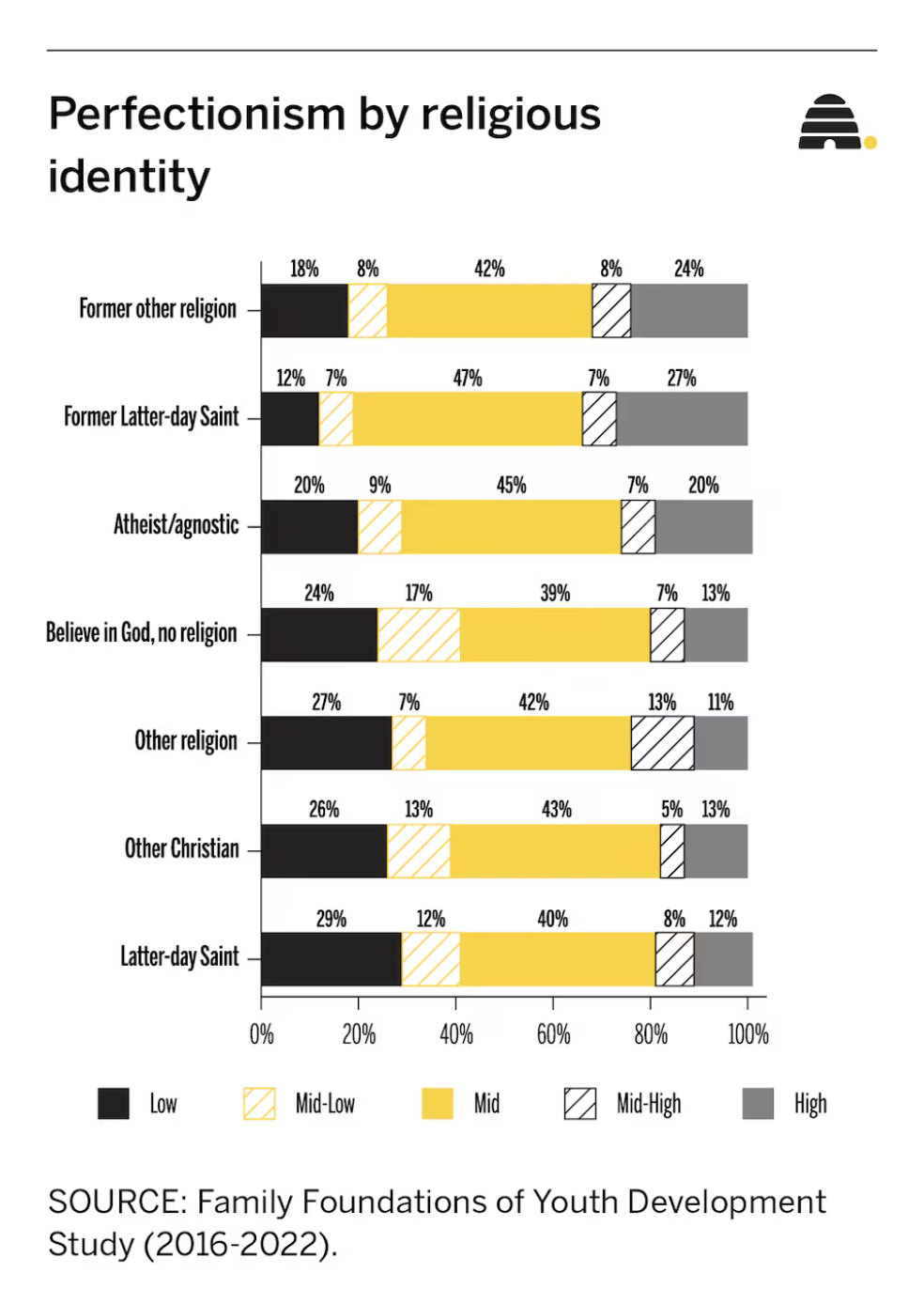
Whenever I see the topic of perfectionism show up in mainstream media, it has my attention. That’s why, when I saw an article in the Deseret News, I was particularly interested. The article Does religion lead to more or less perfectionism? discusses findings published in last month’s issue of the peer-reviewed journal BYU Studies Quarterly focusing on Latter-day Saints and perfectionism. Here are some segments I found intriguing: 

Here are five takeaways from the report:

  • Not all perfection-seeking is the same.
  • Families really do play a significant role in how their children feel about growth, mistakes, and overall worth.
  • Toxic perfectionism really can hurt mental health.
  • One form of perfectionism, in particular, calls for healing.
  • Toxic perfectionism can push people away from God and religion participation.

I’ll let you read the whole article if you are inclined. I found it fascinating since it’s referring to people like me. Much of it resonated well with me. 

Confessions of a Recovering Perfectionist – Part 116

A few weeks ago I attended a retreat in Southern Utah, a “healing weekend” sponsored by Husband Material. I’ve attended other experiential weekends in the past and they have all benefitted me. This one was targeted at healing the inner child. My “inner child” represents the part of me that experienced childhood, including the joys, fears, wounds, and unmet needs from that time.

Many struggles in adulthood—like low self-esteem, fear of rejection, or difficulty trusting others—stem from unmet needs or emotional wounds from childhood. These might be from neglect, trauma, or even unintentional patterns passed down by caregivers.

Perfectionism can show up as a result of childhood traumas. 

The word “trauma” might seem a little extreme for what I’ve been through. When I think of someone being traumatized I usually think of a soldier who came home from the war with PTSD because he saw his buddies die. Or a child who was kidnapped and regularly abused. Or someone who was in a horrible car accident and people were killed. Those are big T traumas. 

Conversely, little t traumas could be like being teased or bullied in grade school. Or moving to a new town and being “the new kid” at a new school. Or not getting the desired attention from one’s parents. In these cases, the kid may be told to “buck up” or “just get over it.” And yet, any of these could have a big T effect on a kid. 

Besides big T and little t traumas, there are A traumas and B traumas. B stands for Bad. So these are when bad things happen—abuse, severe punishment, loss of a family member. And A stands for Absent. These are when certain things are absent in a kid’s life. For example, neglect, not receiving attunement/attachment, or being emotionally abandoned. A traumas can be as destructive as B traumas, particularly because they are more subtle and difficult to recognize.

Also, two kids may have experienced the same challenge; one would be deeply affected by it and the other wouldn’t. For example, the divorce of parents, or being adopted. Some seem to take it in stride and others are scarred for life. It’s all about the perception of the kid. 

If I don’t address these wounds, they can show up in unhealthy relationships, perfectionism, self-sabotage, or emotional reactions that feel bigger than the situation at hand. By connecting with my inner child, I can better understand where my feelings come from and treat myself with the compassion and care I might have missed as a child.

So that’s the purpose of the healing weekend. Healing allows me to show up as a more whole, secure person in relationships, free from the need to be perfect. This isn’t about pretending to be a child again; it’s about acknowledging that the experiences and emotions of my younger self still influence me. And it’s about giving my inner child the support and validation he needed but didn’t adequately receive as a child.

Confessions of a Recovering Perfectionist – Part 114

It was 10 years ago this month that I seriously decided to meet with a counselor. 

The world in which I grew up held a stigma toward counseling. If I weren’t able to deal with whatever life dealt me, then I was weak and incapable. Only really messed-up people needed to see a shrink. 

But I finally decided that I needed help with my perfectionistic thinking. So, since then, I’ve come to be a proponent of receiving counseling. Maybe not everyone needs it, but many could benefit from help from a qualified support person. In addition to professional counselors, this could include life coaches, social workers, mentors, sponsors, and even just a trusted friend lending a listening ear. 

I had my “main” counselor for almost 8 years. We typically met for an hour per week. Fortunately, my insurance paid for most of the cost and my copay was minimal. When I retired, I needed to find a new one, since he didn’t take my retiree insurance. I’ve been through three more, to find another one who was the right fit for me. I need to feel like the counselor has the expertise to help me, there needs to be a rapport between us, and I need to feel that he/she genuinely cares about me. 

Here are some of the ways in which counseling has benefited me. 

My counselor has helped me with perfectionism in really supportive and practical ways. First, he created a safe space where I felt comfortable opening up about my struggles. Perfectionism can be exhausting, and I sometimes feel like I have to constantly be on-task or that I’m not good enough, so it’s important that a counselor listens without judgment.

He has helped me recognize the underlying beliefs driving my perfectionism. A lot of times, perfectionists feel like their worth is tied to how well they perform, or they’re afraid of failure because it feels like a personal reflection of who they are. My counselor worked with me to challenge these beliefs and start breaking down the idea that I need to be perfect to be valuable.

Another thing my counselor has done is encourage me to set more realistic goals and expectations for myself. Instead of aiming for “perfect,” he has helped me aim for “good enough” in different areas of my life. He’d talk through what those more balanced goals might look like and how to be okay with things not going perfectly all the time.

My counselor also taught me coping skills for dealing with the stress that comes up when things don’t go as planned. For example, he showed me how to practice self-compassion—talking to myself kindly rather than beating myself up for every little mistake. He also helped me learn how to step back and take breaks, rather than pushing myself to the point of burnout.

He has helped me uncover where these perfectionist tendencies started—some in childhood, some from pressure at school and work—and then we worked on healing from that. The goal wasn’t for me to stop caring about doing things well, but to help me feel more balanced, more at peace with myself, and less driven by fear and unrealistic expectations.

I’ve appreciated that my counselor has walked alongside me as I’ve learned to let go of the need for perfection and embrace being human, with all the imperfections that come with it.