Perfectionism vs. Scrupulosity
In Latter-day Saint culture, we talk a lot about becoming better. We covenant to improve, repent daily, serve more, love more, do more. That striving can be beautiful. It can also become heavy.
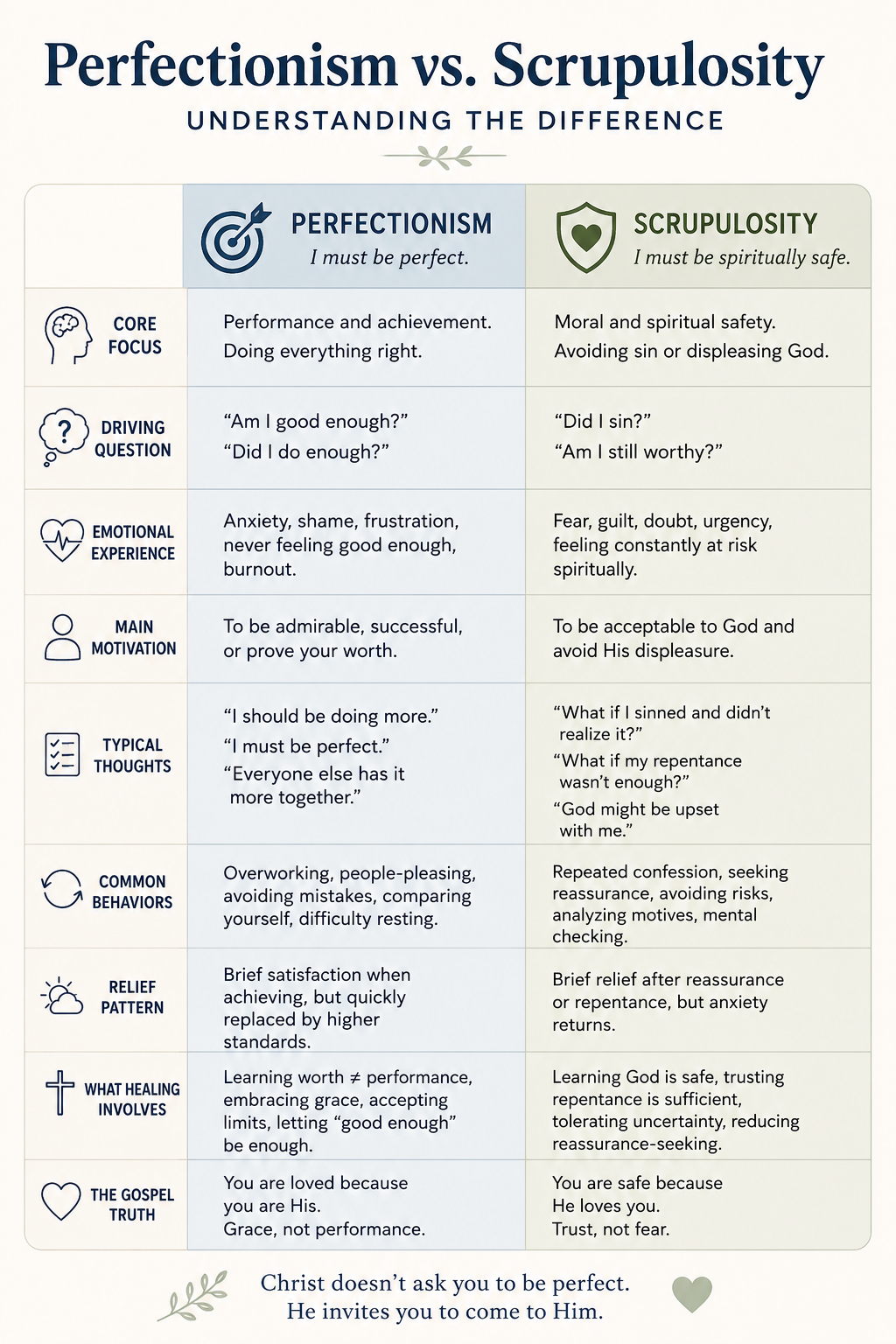
Over the years, both personally and in working with others, I’ve noticed two different struggles that often get confused, perfectionism and scrupulosity. They look similar on the surface. Both involve high standards. Both involve guilt. Both can make you feel like you’re never quite enough. But they are not the same problem, and they don’t heal in the same way. For Church members, understanding the difference can be helpful.
Initially, in comparing the two, you may expect me to show that one is good and the other it bad. Unfortunately, both have detrimental impacts, as you’ll soon discover.
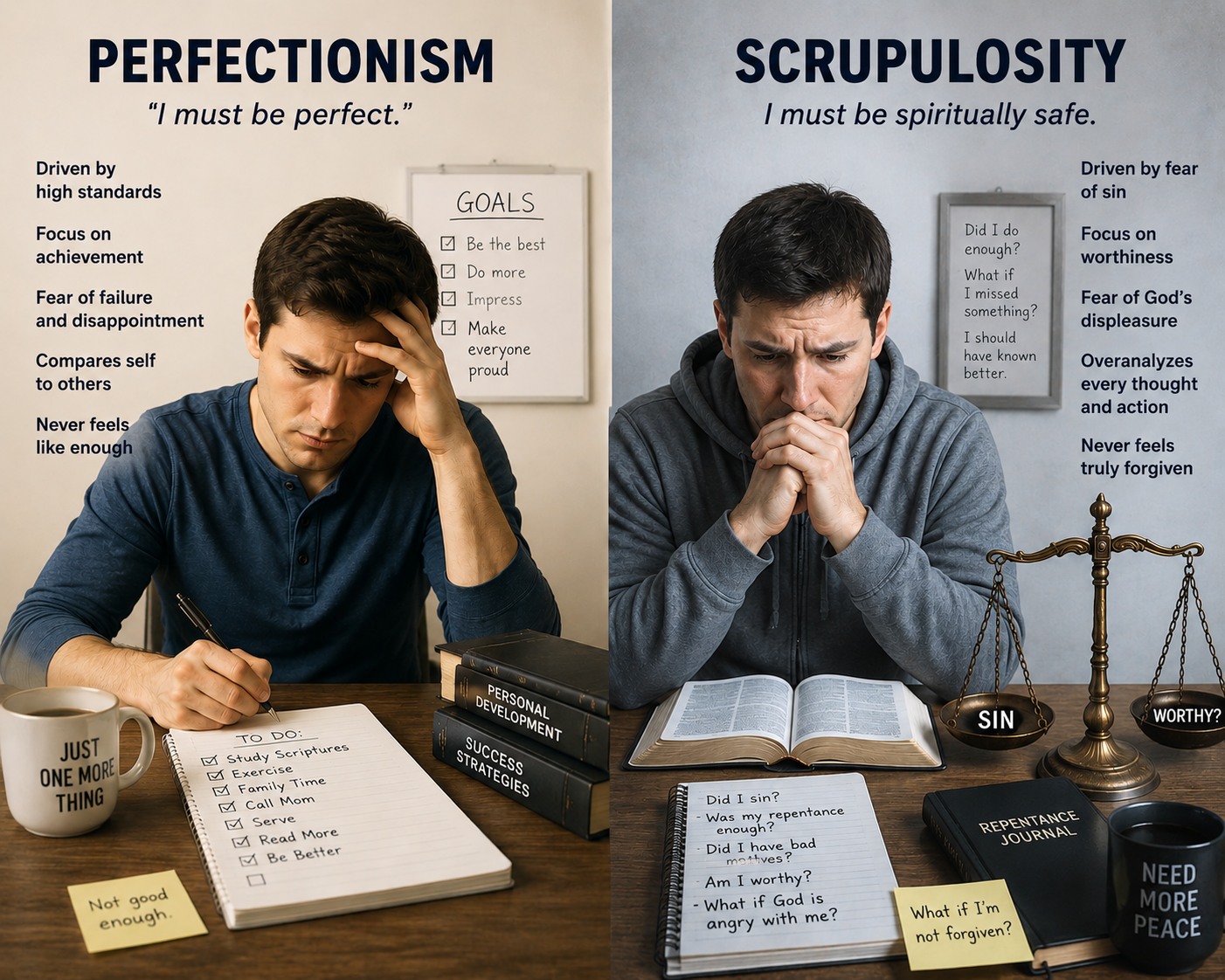
Perfectionism is the relentless pressure to perform flawlessly. It says: If I make a mistake, I’ve failed. If I’m not progressing, I’m regressing. If people see my weaknesses, they won’t respect me. God must be disappointed in me.
Perfectionism is performance based. It focuses on outcomes, achievements, image, and comparison. In church life, it might sound like: I should be a better parent. I should read more scriptures. I should feel the Spirit more. Everyone else seems to have it together.
Perfectionism often produces anxiety, shame, and exhaustion. It turns discipleship into a treadmill you can’t step off. Ironically, perfectionists are often deeply sincere people who want to do what’s right. But instead of drawing closer to Christ, they feel perpetually at arms length from Him.
Scrupulosity is different. It’s not just about doing well. It’s about being morally or spiritually “safe.” It says: What if I sinned and didn’t realize it? What if I didn’t repent properly? What if my motives weren’t pure enough? What if God is upset with me right now?
Scrupulosity is fear-based. It’s driven by anxiety about sin, worthiness, and judgment from God. People with scrupulosity often confess the same things repeatedly, obsess over whether they took the sacrament worthily, fear they’ve committed some serious sin when they haven’t, or feel constant guilt even when doing their best.
While perfectionism says, “I must do everything right,” scrupulosity says, “I might be spiritually in danger even when nothing is wrong.” It can feel like living under a cloud that never lifts.
Both struggles distort how we experience the gospel. Perfectionism distorts grace. Scrupulosity distorts safety.
Perfectionism whispers: God loves the best version of you. Scrupulosity whispers: God might withdraw His love at any moment. Neither message comes from Christ.
Both perfectionism and scrupulosity are attempts to manage fear by controlling behavior. Perfectionism tries to control outcomes. Scrupulosity tries to control moral risk. Both hope that if we do everything right, we’ll finally feel peace. But peace doesn’t come from control. It comes from trust.
For perfectionism, healing involves learning that my worth doesn’t equal performance. For scrupulosity, healing involves learning that God is safe, and trusting that sincere repentance is sufficient. In both cases, the deeper cure is the same. A secure relationship with a merciful Savior. Jesus did not say, “Be perfect immediately, or I can’t help you.” He said: “Come unto Me. Walk with Me”
God isn’t looking for reasons to disqualify you. He’s looking for ways to rescue you. If you are sincerely trying, even imperfectly, you are already moving toward Him.