Confessions of a Recovering Perfectionist – Part 127

For October, I usually promote a General Conference talk that speaks to the perfectionist part of me. This time, I’ve chosen Elder Kearon’s Jesus Christ and Your New Beginning. Here are some of my favorite parts:

I love the thought of new beginnings, unfettered by past mistakes and failures. I love the message of Lamentations 3:22-23 – “It is of the Lord’s mercies that we are not consumed, because his compassions fail not. They are new every morning: great is thy faithfulness.”

Take three minutes and listen to this song by Micah Tyler. 

Confessions of a Recovering Perfectionist – Part 121

After General Conference, for my monthly blog post, I usually choose a talk that deals with some of my perfectionistic tendencies. This time, the obvious choice is Sister Tamara W. Runia, First Counselor in the Young Women General Presidency. Here are some of my favorite quotes from her talk: 

This is one of the concepts that has helped me to become more shame resilient. I distinguish between my infinite worth and my behavior. Although my behavior may be maladaptive at times, my worth in the sight of God never fluctuates. 

You can read the full talk here

Confessions of a Recovering Perfectionist – Part 120

This month, I attended two events designed to help me develop my skills in facilitating psychodrama. 

The first was a weekend retreat sponsored by The Crucible Project. Here’s some more information about the organization as taken from their website:

Focus:
The Crucible Project aims to create a world where people live with integrity, grace, and courage, fulfilling their God-given purpose. 

Method:
They achieve this through transformational retreats, groups, and coaching, fostering communities where people live authentically and with integrity. 

Retreats:
These retreats are designed to challenge individuals to take a hard look at their lives, wrestle with God, and discover new truths about themselves, finding freedom to break away from self-sabotaging beliefs. 

Intense Experience:
The Crucible Weekend is an intense experience that can be emotionally, spiritually, and physically challenging. 

Radical Honesty and Grace:
The retreats emphasize radical honesty and grace, creating a space for individuals to wrestle with God and discover new truths about themselves. 

Community:
The Crucible Project fosters a community of men and women who have gone through the retreats, providing support and encouragement. 

Locations:
The Crucible Project has retreats in the United States, International locations, and Second-level Weekends. 

Vision:
Their vision is a world of men and women who live with integrity, grace, and courage. 

Mission:
Their mission is to ignite personal change in men and women through experiencing Jesus, and taking a journey of radical honesty and self-reflection.  

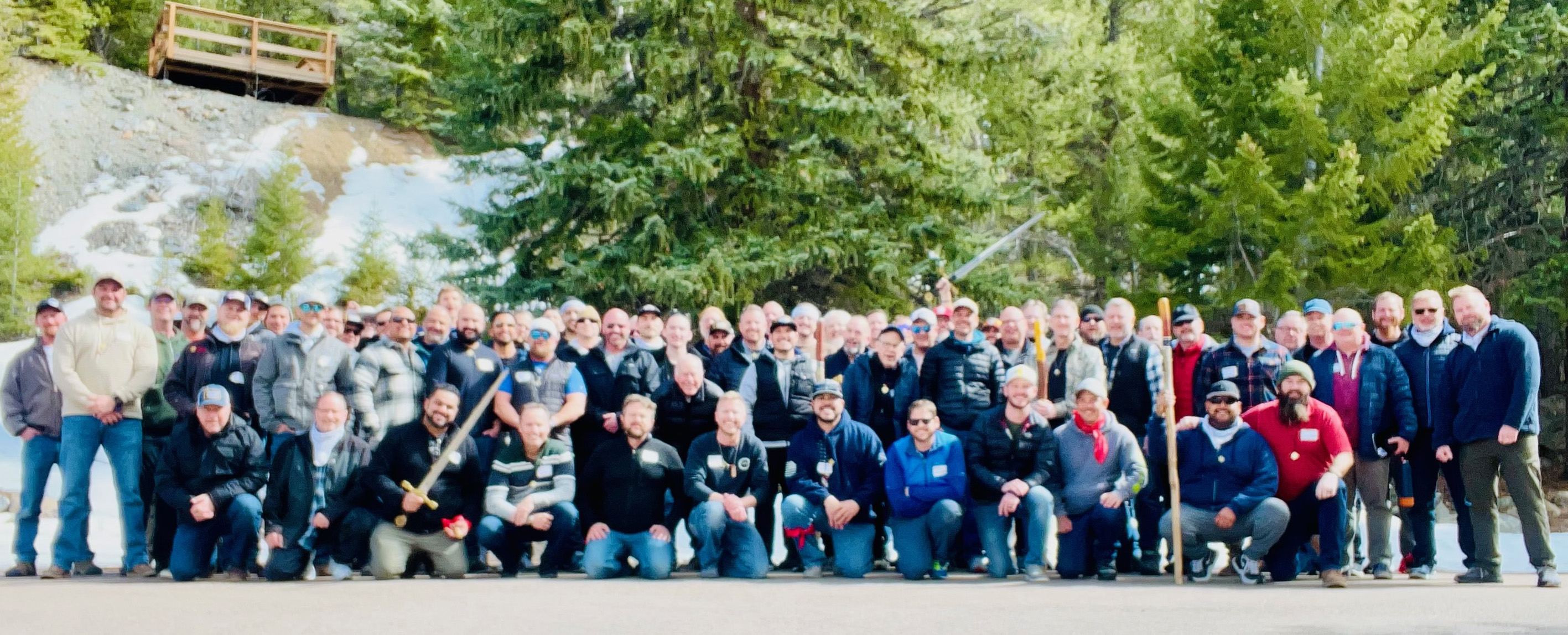
The retreat I attended was held in Empire, CO, about an hour west of Denver, at the Easter Seals Rocky Mountain Village facility. Most of the meetings were held in a lodge, and we stayed in cabins with other men. There were 37 participants and about that same number of staff members. (In the photo, I’m kneeling in front, second from the left.)

The second event I attended was a one-day Guts Work Facilitation Training held in Taylorsville, UT. It was held at the home of a man who was willing to host it free of charge. Eleven of us were in attendance, men who had previously participated in the Mankind Project NWTA weekend. Three were staff members, and the other eight of us were attendees. 

I’ve had a lot of talk therapy over the years with various counselors, which has been great, and I’ve needed it. However, this approach was different in that it was more experiential, somatic, and physical. It aligns well with a book I recently studied called “The Body Keeps the Score” by Bessel van der Kolk. The central premise of the book is that trauma profoundly impacts the brain and body, leading to physical and emotional dysregulation, and that healing trauma requires understanding and addressing these physiological and neurological changes.

One of the main processes used to heal these wounds is psychodrama. Psychodrama focuses on a person’s real-life experiences and internal conflicts, allowing individuals to explore and express their emotions and experiences through dramatic action. While it can be used in individual therapy, psychodrama is often conducted in a group setting, where participants can act out scenes from their lives under the guidance of a trained facilitator. Put together, then, a psycho-drama is quite literally a “drama of the mind and soul.” 

In each psychodrama process, I was able to re-enact a painful experience from my past. The result of the process is that I’m able to receive closure and resolution. Technically I don’t actually change what happened in the past, but I’m able to change how I feel about what happened. This results in greater peace and freedom. 

Some of my perfectionist tendencies are the result of experiences I had as a kid, where I felt like I needed to be perfect in order to be acceptable. Of course, perfection in this life is impossible, so that created a lot of internal chaos. Working through the scenarios as an adult showed me that those expectations were unrealistic. I can approach myself with kindness and curiosity. I’m better able to give myself grace. 

Confessions of a Recovering Perfectionist – Part 119

I stumbled across a quote by C.S. Lewis that addresses perfection and how the Lord intends to perfect us. This is great!

C.S. Lewis, Mere Christianity (1952; Harper Collins: 2001)

The Lord’s work and glory is to exalt me. And He knows how to do his work.

Confessions of a Recovering Perfectionist – Part 117

As I look at setting New Year’s resolutions, which is my MO at this time of year, I typically like to choose a word or phrase as a theme for the coming year. I haven’t settled on this one for sure, but I’m leaning toward “be still.” 

I’m grateful that I’m retired and have a little more time to pull back from the daily grind and find peace and calm. It’s nice to not feel the expectation of constantly needing to “get it right” but rather, breathe in the stillness. 

Confessions of a Recovering Perfectionist – Part 115

When I watch General Conference, I listen for specific guidance for those of us who struggle to feel God’s love. Elder Hirst’s talk stood out to me. Let me share some of my favorite parts. 

Confessions of a Recovering Perfectionist – Part 111

The older I get, the more I realize that there is a lot of information out there that is good and true. (Yes, there is also a lot that is bad and false, but stay with me here.) I used to think that if a concept wasn’t spoken over the pulpit at General Conference, then we couldn’t accept it as true. That was absolute thinking. I hope I have a healthier approach now. 

President Nelson taught:

Joseph Smith taught:

Brigham Young taught:

I am encouraged to learn by study and also by faith. I can embrace truth, wherever I find it. May I have the spirit of discernment to distinguish between truth and error. 

Confessions of a Recovering Perfectionist – Part 109

During General Conference, I listen to see who addresses anything pertaining to perfectionism. This time, I chose Elder Kearon’s talk because of the hope it gives for removing barriers to returning to God. It also shows how much God wants us back with Him. I pulled several paragraphs straight from his address: 

How could he be more direct? How could I dispute the Lord’s goodness and love? And Elder Kearon’s fun British accent adds to the sweetness of the truths he shares.

Confessions of a Recovering Perfectionist – Part 108

I’ve asked myself this question many times. I’ve been hypervigilant for words that could give me hope that God isn’t upset, angered, and displeased with me. So I was grateful to hear this two years ago in April Conference: 

“God does not now see, nor has He ever seen, you as someone to be despised. . . He is not ashamed of you or disappointed in you.” —Elder Patrick Kearon 

I’ve known Kurt Francom through his Leading Saints organization, which I started following about seven years ago. Then I met Kurt five years ago at a retreat (see Part 48). I felt a kinship with him as we talked about how we wished our elders quorums were places where men could be more emotionally vulnerable and supportive. And how it’s common to crave the approval of others. And that it’s hard to see God as pleased with us when we make mistakes. So I could see the beginnings of the book taking root back then. 

As I was studying this book, I often thought: “I wish I’d had this years ago.” I also thought of several people I could send a copy to. It’s probably one of the most important books I’ve come across in the last 5 years. And it has only been available since last month. 

Here’s the summary taken from the back cover of the book:

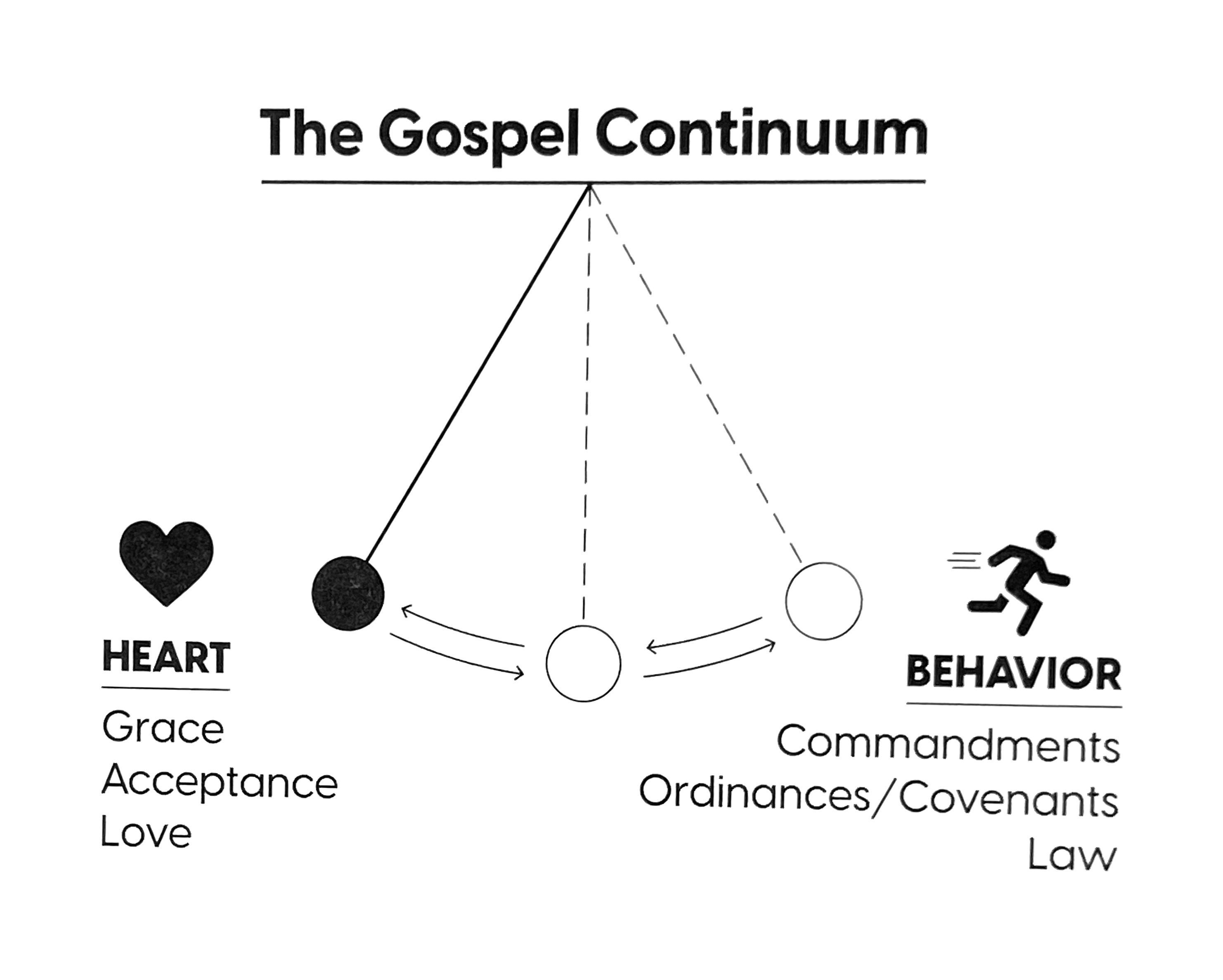
The full title is Is God Disappointed in Me? Removing Shame from a Gospel of Grace. As a recovering perfectionist, I’ve written about the destructive effects of shame several times on this blog. So one of my favorite parts of the book is Chapter Five: Identity. Usually, Satan doesn’t directly try to get me to do bad things. He attacks my identity as a beloved child of God. My divine nature. My infinite worth. He wants me to focus on my behavior more than my heart. It’s a very subtle approach. Yet, it is so effective. 

I highly recommend this book. 

(There’s an Audible version if you prefer to listen. On Amazon, it’s totally worth the $15.99, but you can get it at your local Costco for $9.99.) 

(Kurt has done several interviews/podcasts about this topic. One of my favorites is this one with Ritchie Steadman, host of The Cultural Hall. It’s about 53 minutes.)

Confessions of a Recovering Perfectionist – Part 106

For this month’s post, I will quote directly from my friend, Jason. It resonates with the perfectionist part of me. 

We men like formulas. We like bullet points. We like bright lines. They make life easier. They cut through mystery and doubt. We’d love it if such things could govern our relationships with God. They would make following him easier, too. At least, we think they would. So we try to create them. It starts innocently: Someone seeks God and finds him—through a specific prayer or practice, or through a particular way of studying Scripture or being in community or doing service. But, then, that person decides that’s “the” way to find God. Others are persuaded, of course, because they want to find God too. And a formula is born, a bullet point, a bright line, a rule about how our relationships with God must look.

The thing is, while God never changes (James 1:17, Hebrews 13:8), our relationships with him do. They’re ever-changing, ever challenging (2 Corinthians 3:18). There’s always more with God. There’s always mystery. And there’s always something new. But because we fear change and fear being challenged, we often cling to what’s worked in the past or what’s worked for someone else. We create a rule, repeat a ritual, but we may not grow and mature in our relationships with God.

Okay, so what do we do?

“Don’t set people up as experts over your life, letting them tell you what to do. Save that authority for God; let him tell you what to do” (Matthew 23:8-10 MSG).

Set aside some time to pray and to listen. Ask the Holy Spirit to guide you. Ask where you might find him next—maybe in Scripture; maybe through serving; or on a short-term mission; or out in his creation; or something else. Let him guide your thoughts. Let him keep you on track.