Confessions of a Recovering Perfectionist – Part 112

As a teenager attending Dixie High School in St. George, UT, I played trombone in the marching band. A few times each year, we would march in parades that started going east on Main Street and later turned and came back west on Tabernacle Street. Our band director was a stickler for dressing appropriately. We wore the band uniforms and each of us had to buy our own white sneakers. 

One time when we were marching in a homecoming parade, trombones leading the band, I looked down and saw that the shoelace on my right shoe had come untied. The shoe was becoming looser on my foot. I knew that at some point I would need to stop, step out of line, and tie the shoelace. Otherwise, I would lose the shoe. 

As we marched along, I began thinking about when and where might be a good place to step out. I watched for places where fewer spectators were along the route. I also wanted to choose a time when we were not playing a tune or doing a formation or maneuver. 

It took my attention away from doing my job as a member of the marching band. It was difficult to concentrate on marching and also plan where to stop. 

Since then, I have used this dilemma as a metaphor. When I have something important that needs to be done, yet there hasn’t been a convenient time to do it, it’s always there at the back of my mind. “It feels like my shoelace is untied.” 

For a perfectionist, this creates angst. I have a checklist mentality and not being able to check everything off feels unsettling. It also messes with my ability to distinguish between what is urgent and what is important. 

In a 1954 speech, President Dwight D. Eisenhower said, “I have two kinds of problems, the urgent and the important. The urgent are not important, and the important are never urgent.” 

The Eisenhower Matrix, also known as the Urgent-Important Matrix, is a time management and decision-making method to help effectively prioritize tasks. The framework categorizes your tasks into four quadrants based on their urgency and importance:

I. Important and urgent
Tasks that have high importance and need immediate attention.
• Answer urgent emails
• Medical emergencies
• Projects with deadlines
• Crises and catastrophes
                       
II. Important, but not urgent
Tasks that don’t have a deadline but move you closer to your goals.
• Long-term planning
• Personal improvement
• Relationship building
• Values clarification
                       
III. Not important, but urgent
Tasks that need to get done but don’t need your expertise. 
• Busy work
• Meal prep
• Interruptions
• Plan staff picnic
                       
IV. Not important and not urgent
Tasks that don’t add value and can distract you from your goals. 
• Binge on social media
• Video games
• Infuriating political news
• Sort your junk mail

Stephen R. Covey, popularized the Eisenhower Matrix, showing how it can help in achieving personal and professional effectiveness. He stressed that the key to time management isn’t about doing more, but rather deciding where your time is best spent.

How might a perfectionist struggle with approaching tasks in these four quadrants? 

Quadrant I: Perfectionists may struggle with tasks in this quadrant because the urgency can increase their fear of making mistakes. They might spend a lot of time perfecting details, which can lead to stress and burnout.

Quadrant II: Perfectionists may procrastinate on starting these tasks due to the desire to perform them flawlessly.

Quadrant III: Perfectionists may find it difficult to delegate or ignore tasks in this quadrant, even though they do not contribute significantly to long-term goals. They might feel compelled to handle these tasks personally to ensure they are done correctly.

Quadrant IV: Perfectionists might get caught up in these tasks as a form of procrastination or because they feel guilty about leaving any task undone.

By becoming aware of these potential pitfalls, I can hopefully avoid them and put my efforts toward becoming more effective. 

Confessions of a Recovering Perfectionist – Part 111

The older I get, the more I realize that there is a lot of information out there that is good and true. (Yes, there is also a lot that is bad and false, but stay with me here.) I used to think that if a concept wasn’t spoken over the pulpit at General Conference, then we couldn’t accept it as true. That was absolute thinking. I hope I have a healthier approach now. 

President Nelson taught:

Joseph Smith taught:

Brigham Young taught:

I am encouraged to learn by study and also by faith. I can embrace truth, wherever I find it. May I have the spirit of discernment to distinguish between truth and error. 

Confessions of a Recovering Perfectionist – Part 110

Perfectionists are often inclined to expect unreasonable things from ourselves. When I get inspiration, it’s not enough to experience a still small voice; I want clanging bells and flashing lights, thunder and lightning. Otherwise, I’m inadequate. Elder Dushku addressed this issue in his General Conference talk last month: 

So then, it’s unrealistic to expect singular Alma-like or Saul-like visions or visitations. Rather, ray upon ray, inspiration will come to enlighten me throughout my journey. 

Confessions of a Recovering Perfectionist – Part 109

During General Conference, I listen to see who addresses anything pertaining to perfectionism. This time, I chose Elder Kearon’s talk because of the hope it gives for removing barriers to returning to God. It also shows how much God wants us back with Him. I pulled several paragraphs straight from his address: 

How could he be more direct? How could I dispute the Lord’s goodness and love? And Elder Kearon’s fun British accent adds to the sweetness of the truths he shares.

Confessions of a Recovering Perfectionist – Part 108

I’ve asked myself this question many times. I’ve been hypervigilant for words that could give me hope that God isn’t upset, angered, and displeased with me. So I was grateful to hear this two years ago in April Conference: 

“God does not now see, nor has He ever seen, you as someone to be despised. . . He is not ashamed of you or disappointed in you.” —Elder Patrick Kearon 

I’ve known Kurt Francom through his Leading Saints organization, which I started following about seven years ago. Then I met Kurt five years ago at a retreat (see Part 48). I felt a kinship with him as we talked about how we wished our elders quorums were places where men could be more emotionally vulnerable and supportive. And how it’s common to crave the approval of others. And that it’s hard to see God as pleased with us when we make mistakes. So I could see the beginnings of the book taking root back then. 

As I was studying this book, I often thought: “I wish I’d had this years ago.” I also thought of several people I could send a copy to. It’s probably one of the most important books I’ve come across in the last 5 years. And it has only been available since last month. 

Here’s the summary taken from the back cover of the book:

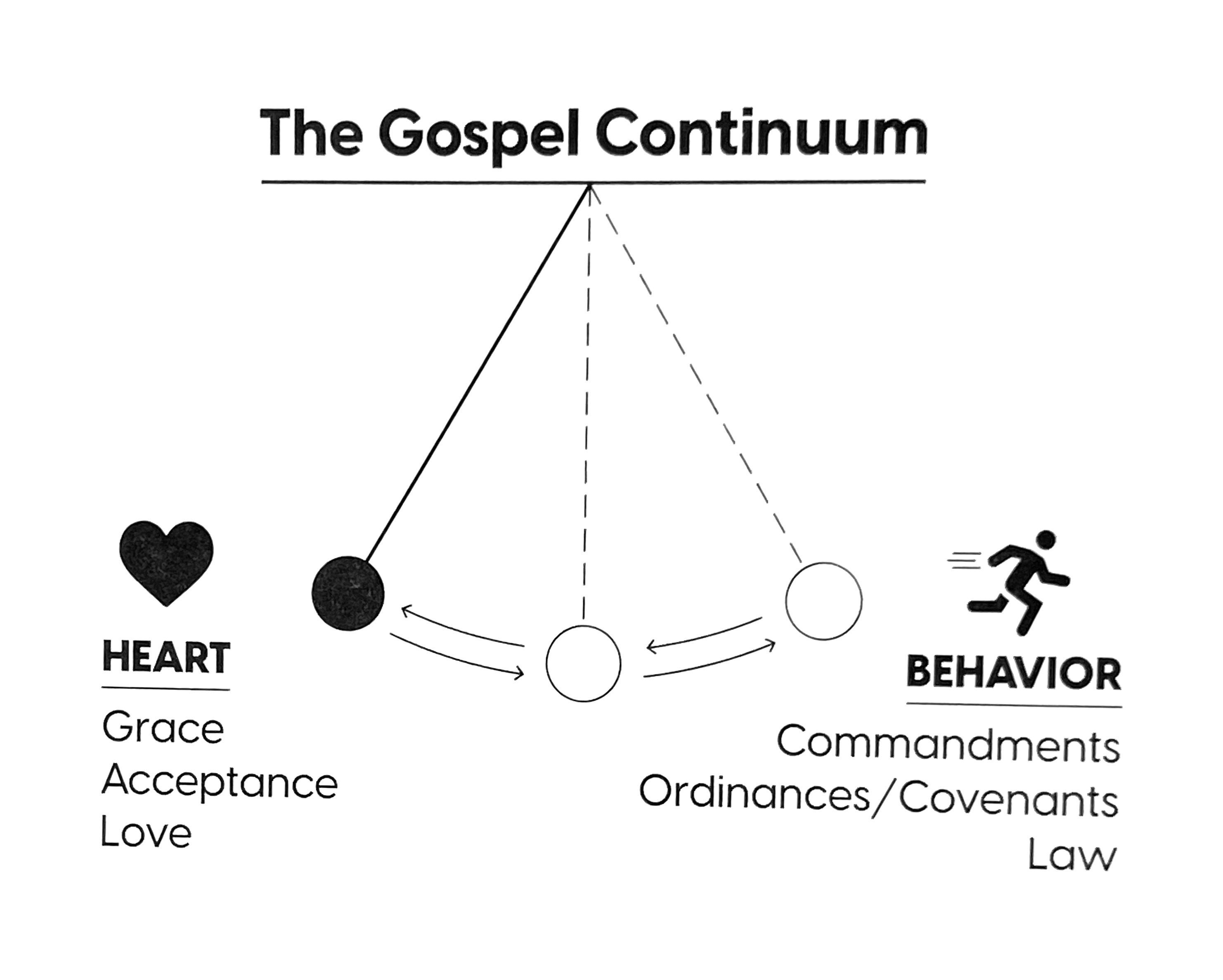
The full title is Is God Disappointed in Me? Removing Shame from a Gospel of Grace. As a recovering perfectionist, I’ve written about the destructive effects of shame several times on this blog. So one of my favorite parts of the book is Chapter Five: Identity. Usually, Satan doesn’t directly try to get me to do bad things. He attacks my identity as a beloved child of God. My divine nature. My infinite worth. He wants me to focus on my behavior more than my heart. It’s a very subtle approach. Yet, it is so effective. 

I highly recommend this book. 

(There’s an Audible version if you prefer to listen. On Amazon, it’s totally worth the $15.99, but you can get it at your local Costco for $9.99.) 

(Kurt has done several interviews/podcasts about this topic. One of my favorites is this one with Ritchie Steadman, host of The Cultural Hall. It’s about 53 minutes.)

Confessions of a Recovering Perfectionist – Part 107

A few months ago I joined a men’s book discussion group. Every six weeks we choose a book to read and then hold an evening video conference to discuss it. The latest book was “No More Mr. Nice Guy” by Dr. Robert Glover. 

I’d heard this book’s title thrown around a bit, and had even had it recommended to me by two different friends. But I must admit, I was hesitant to read it, mostly because I’ve always thought that being nice was a good thing. So it was providential that I needed to read it for the group discussion. 

After reading the book, I’ll say that I’ve probably been an 80% nice guy for most of my life. Here are some of the traits of the nice guy. Nice guys—

Seek acceptance from others 
Are conflict-avoidant
Are pleasers and givers
Are caretakers
Seek the right way to do things
Try to be perfect and avoid mistakes 
Care a lot about how others perceive them
Have a hard time saying no
Repress their feelings
Want to be different from their fathers
Are more comfortable being with women
Don’t want to rock the boat
Exert tremendous effort to make others happy
Are often co-dependent
Believe they are not OK as they are
Become a chameleon for whoever they are with
Tells people what they want to hear
Link their self-worth to the approval of others
Hide their true intention
Can be perfectionistic
Use indirect ways and manipulation to get what they want
Can be very controlling
Meet other people’s needs at the expense of getting their own needs met
Serve because they think it makes them look good, but might resent it
Are passive-aggressive 
Are afraid if others knew what they were really like, they would be rejected
Withold thoughts and emotions for fear of disapproval from others
Might disagree, but don’t say it, to avoid conflict and arguments
Don’t speak their preferences outright, but beat around the bush
Try to keep the peace 

Most people have some of these traits, but nice guys have most of them.

Luckily the book also includes information on how to move from the nice guy syndrome to becoming the ideal man. The ideal man—

Handles conflict and establishes boundaries.
Holds himself accountable for his own needs and desires.
Addresses and learns from his flaws and mistakes.
Takes charge and genuinely cares for his loved ones.
Communicates and shares his thoughts and emotions openly and honestly.
Builds healthy and meaningful relationships with everyone, including both women and men.

For so long, I was in self-deception about the destructive impacts of being a nice guy. At this point, I am healing from the unhealthy characteristics and increasing in the healthy characteristics. I’m grateful for this book and how it has enlightened my awareness. 

Confessions of a Recovering Perfectionist – Part 106

For this month’s post, I will quote directly from my friend, Jason. It resonates with the perfectionist part of me. 

We men like formulas. We like bullet points. We like bright lines. They make life easier. They cut through mystery and doubt. We’d love it if such things could govern our relationships with God. They would make following him easier, too. At least, we think they would. So we try to create them. It starts innocently: Someone seeks God and finds him—through a specific prayer or practice, or through a particular way of studying Scripture or being in community or doing service. But, then, that person decides that’s “the” way to find God. Others are persuaded, of course, because they want to find God too. And a formula is born, a bullet point, a bright line, a rule about how our relationships with God must look.

The thing is, while God never changes (James 1:17, Hebrews 13:8), our relationships with him do. They’re ever-changing, ever challenging (2 Corinthians 3:18). There’s always more with God. There’s always mystery. And there’s always something new. But because we fear change and fear being challenged, we often cling to what’s worked in the past or what’s worked for someone else. We create a rule, repeat a ritual, but we may not grow and mature in our relationships with God.

Okay, so what do we do?

“Don’t set people up as experts over your life, letting them tell you what to do. Save that authority for God; let him tell you what to do” (Matthew 23:8-10 MSG).

Set aside some time to pray and to listen. Ask the Holy Spirit to guide you. Ask where you might find him next—maybe in Scripture; maybe through serving; or on a short-term mission; or out in his creation; or something else. Let him guide your thoughts. Let him keep you on track.

Confessions of a Recovering Perfectionist – Part 105

Part of the challenge of mortality is the unpredictability. Perfectionists like things to happen in order and on schedule. I recently heard an analogy that I like:

Life is like a puzzle, only I don’t get to see the final picture at the beginning. 

So I start out by finding a few pieces that fit together, usually around the outer edge. The outside edges are easier. (Similarly, I might be able to fix my outside so it looks put together. But on the inside, it’s more difficult and messy.)  

I might see a piece that looks like it would fit, but when I try it, it’s not quite right, so I have to set it aside for the time being. I don’t throw out the whole puzzle just because I can’t figure out where that particular piece goes. 

I might have a piece that is oddly shaped, or that is particularly distinctive. When I see where it matches, it’s pretty obvious.

There are times when I need to pull away from putting the puzzle together to focus on other concerns, and it seems like not much gets done for a period of time. When I come back to it later, I might have a fresh outlook that helps. 

Other people might stop by and help me put some of the pieces together. They might see connections I’ve not seen. 

Sometimes I need to let go of the picture I’m trying to create. My idea of what it “should” look like can blind me to what it “could” look like. When I’m determined to create a particular outcome, I can close myself off to possibilities hiding in the pile of options right in front of me. 

As I gradually piece the puzzle together, the big picture starts to emerge. 

At Christmas time, we typically take neighbor gifts around to the people on our street. It’s fun to come up with a clever saying to go with the gift:
• Just popping in to say Merry Christmas! (popcorn)
• Merry Swiss Miss! (hot chocolate)
• We whisk you a Merry Christmas! (wire whisk)
• Seasoned Greetings! (bottle of seasoning)
• We’re soda lighted to wish you Happy Holidays! (bottle of soda)

You get the idea. 

So this year we gave each neighbor a small wooden puzzle with the tag: Piece on Earth! 

Confessions of a Recovering Perfectionist – Part 104

This month I’m going to pull content straight from a short article on the Church’s website.

You’re not perfect yet, and that’s OK!
Do you struggle with getting down on yourself, especially when you mess up?

Some guilt is spiritually healthy. For example, if we sin and feel bad about it, we may want to repent and do better next time. That’s a positive process.

On the other hand, we can be paralyzed by a fear of making a mistake. This attitude of perfectionism can be poisonous to our progression. Put simply, perfectionism means you want to be better without ever messing up or expressing strong emotions like anger, sadness, anxiety, and fear. Instead of learning from our mistakes and moving on, we spend a lot of energy dwelling on past mistakes or avoiding growing experiences altogether.

Sound familiar? If so, here are some things to think about:

Emotions are strengths, not weaknesses.
We can focus on improvement, not perfection.
God understands that we may sometimes make mistakes. And learning from the mistakes we make is part of His plan for our progression.
The Atonement of Jesus Christ covers our weaknesses and shortcomings as well as our sins.

Our prophet, President Russell M. Nelson, taught that our perfection is pending. True perfection will not be achieved in this mortal life, but in the next life, after we are resurrected, through the grace of Jesus Christ.

Watch this video about a young woman’s journey in overcoming perfectionism.

Confessions of a Recovering Perfectionist – Part 103

The more I learn about perfection, the more I come to realize that I can’t perfect myself. I can only be perfected in Christ. Although I can’t perfect myself, I can make choices that will keep me on a path to greater light and truth. And with greater light and truth, I can see things more clearly. This aligns with a statement by Joseph Smith which I call the “nearer and clearer” promise: 

“The nearer man approaches perfection, the clearer are his views, and the greater his enjoyments, till he has overcome the evils of his life and lost every desire for sin; and like the ancients, arrives at the point in faith where he is wrapped in the power and glory of his Maker and is caught up to dwell with him. But we consider that this is a station to which no man ever arrived in a moment” (Joseph Smith, History of the Church, 2:8).

This is actually happening to me—on a small scale. When I invite the Savior into me, He changes my heart, little by little, and I take on His attributes a little more. As a result, I have eyes to see things and ears to hear things more readily. Things that may have been hidden from my younger self. 

This has all been a gift, nothing I have earned or deserved, really. 

As I reflect, I can think of a few things that have contributed to this change of heart. 

I think part of it has been the fact that I’m spending more time in the temple. President Nelson promised blessings from increased time in the temple, and I’m realizing that. 

“It is significant that the Savior chose to appear to the people at the temple. It is His house. It is filled with His power. Let us never lose sight of what the Lord is doing for us now. He is making His temples more accessible. He is accelerating the pace at which we are building temples. He is increasing our ability to help gather Israel. He is also making it easier for each of us to become spiritually refined. I promise that increased time in the temple will bless your life in ways nothing else can… My dear brothers and sisters, may you focus on the temple in ways you never have before. I bless you to grow closer to God and Jesus Christ every day” (Russell M. Nelson, CR, November 2022).

Another reason I’m experiencing this is because I’m now retired and have more time to spend serving others. And when we give, we receive back manifold. The Lord is giving me more opportunities to minister and be ministered to. And I’m in a good position to respond to those opportunities. 

“There are doors we can open, blessings we can give, hearts we can heal, burdens we can lift, testimonies we can strengthen, lives we can save, and joy we can bring” (Russell M. Nelson, CR, April 2018).

I give thanks to the Lord for His grace, which has allowed me to see things more clearly.